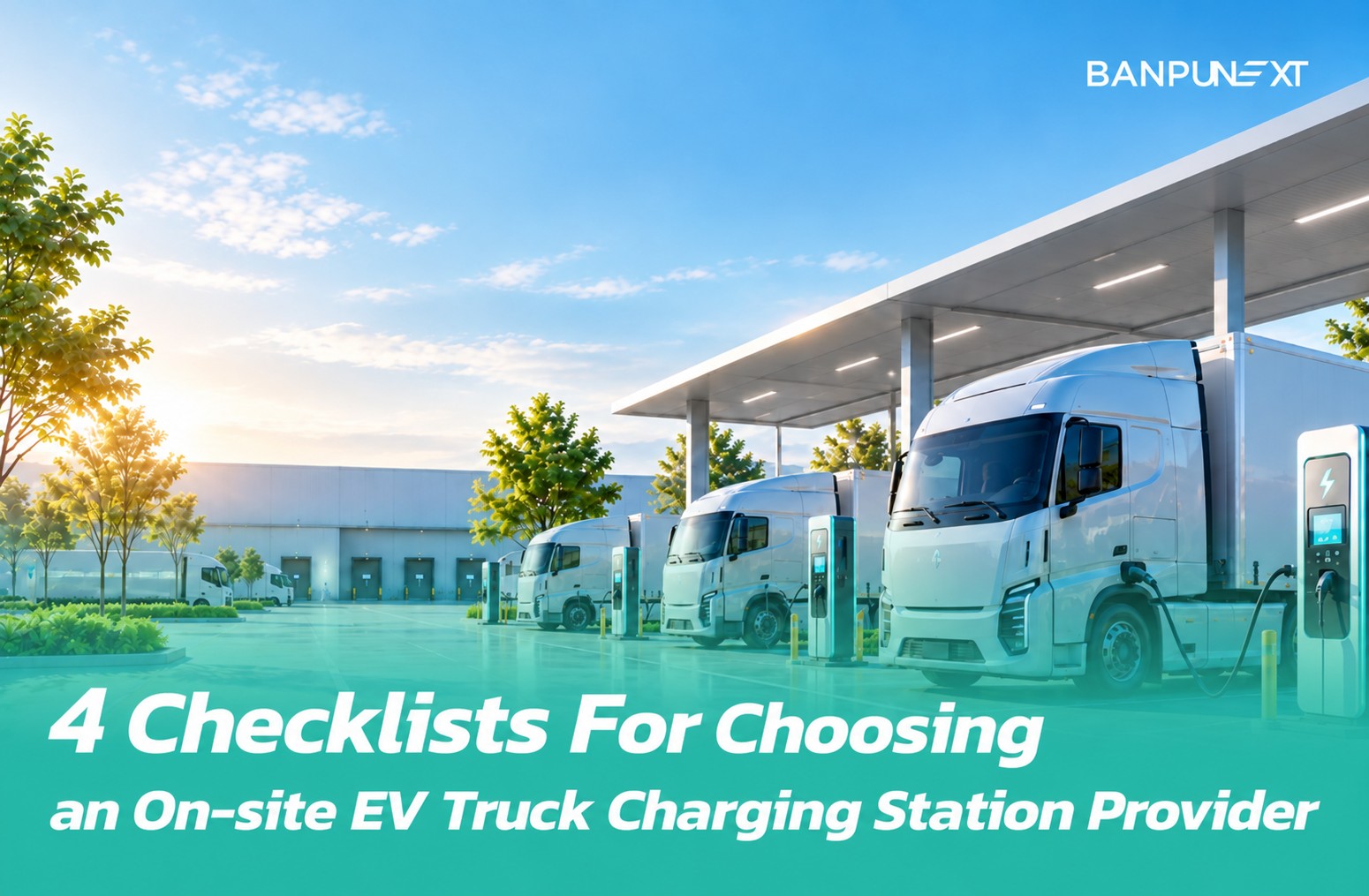
On-site EV truck charging stations at business premises are ideal for businesses with large fleets, defined transport routes, and structured charging schedules. Choosing an end-to-end service provider is essential—from consultation and electrical assessment to charger installation, fleet management, maintenance, and after-sales support. Banpu NEXT provides comprehensive on-site EV truck charging station installation service at business premises.
As the transport and logistics sector shifts toward commercial fleet electrification to reduce fuel costs and carbon emissions, on-site charging gives businesses greater flexibility to plan EV truck charging around their fleet operating schedules. However, electric trucks require significantly larger batteries and higher charging power than passenger EVs. Successful deployment therefore depends on fast-charging capability, electrical infrastructure readiness, load management, safety, fleet management systems, and overall investment viability.
This article outlines 4 checklists for choosing an on-site EV truck charging station provider, helping businesses identify a partner with solutions that are practical, safe, and built to deliver long-term value.
Why Transport Businesses Should Install the On-Site EV Truck Charging Station at Business Premises
For businesses operating EV truck fleets from warehouses, distribution centers, or industrial facilities, on-site fleet charging at their business premises makes it easier to align charging with daily transport schedules. Trucks can charge during loading, driver breaks, after completing their delivery ends, or overnight while parked—reducing unnecessary trips to public charging stations and minimizing operational downtime.
Managing on-site charging schedules also improves fleet uptime by giving businesses greater control over which vehicles charge first, how much energy they receive, and when they are ready to return to service. This helps reduce charging queues, minimize the risk of insufficient battery levels during operations, and prevent delivery delays—while enabling more accurate fleet and route planning.
Another key advantage of on-site EV truck charging is greater control over electricity costs. Businesses can schedule charging during lower-cost Off-Peak periods under Time-of-Use (TOU) tariffs, while an energy management system can also control charging power across multiple vehicles to prevent unnecessary spikes in Peak Demand. Together, these strategies give businesses greater cost control than relying solely on public charging stations.
On-site charging gives businesses greater control over charging time, energy costs, and fleet availability. When charger capacity, power output, and charging schedules are aligned with transport operations, businesses can improve fleet efficiency and make the transition to electric trucks more cost-effective.
Is On-Site EV Truck Charging Station Worth the Investment?
Businesses should evaluate the Total Cost of Ownership (TCO) of switching to electric trucks with on-site charging, rather than focusing only on upfront investment. This includes vehicle and battery costs, energy expenses, charger installation, electrical upgrades, maintenance, and actual route and mileage requirements. A well-designed on-site charging system is key to unlocking the real cost savings and operational benefits of an EV truck fleet in day-to-day use.
- Lower Energy Cost per Kilometer
EV trucks typically have a lower energy cost per kilometer than diesel trucks. Charging at an on-site station during Off-Peak periods can lower energy costs even further while giving businesses greater cost predictability than relying on public charging networks. - Lower Maintenance Costs
EV trucks have fewer moving parts than internal combustion engine (ICE) vehicles, with no engine oil, oil filters, or exhaust systems requiring routine servicing. As a result, annual maintenance costs can be reduced by around 30–50%, depending on operating conditions and usage patterns.
- Long-Term Return on Investment (ROI)
For high-mileage logistics fleets operating long, consistent routes every day, savings on energy and maintenance can help recover the combined investment in vehicles and charging infrastructure within a few years, depending on utilization, fuel prices, and electricity rates.
Banpu NEXT installs on-site EV truck charging station at business premises and covers the upfront investment, which helps businesses further reduce costs for charging equipment, installation, and ongoing maintenance.
This investment delivers the greatest value for fleets with predictable routes, regular parking locations, and consistent operating schedules. Conducting a TCO analysis based on actual fleet usage helps businesses right-size the charging system, shorten the payback period, and build a long-term cost advantage.
4 Checklists for Choosing an On-Site EV Truck Charging Station Provider
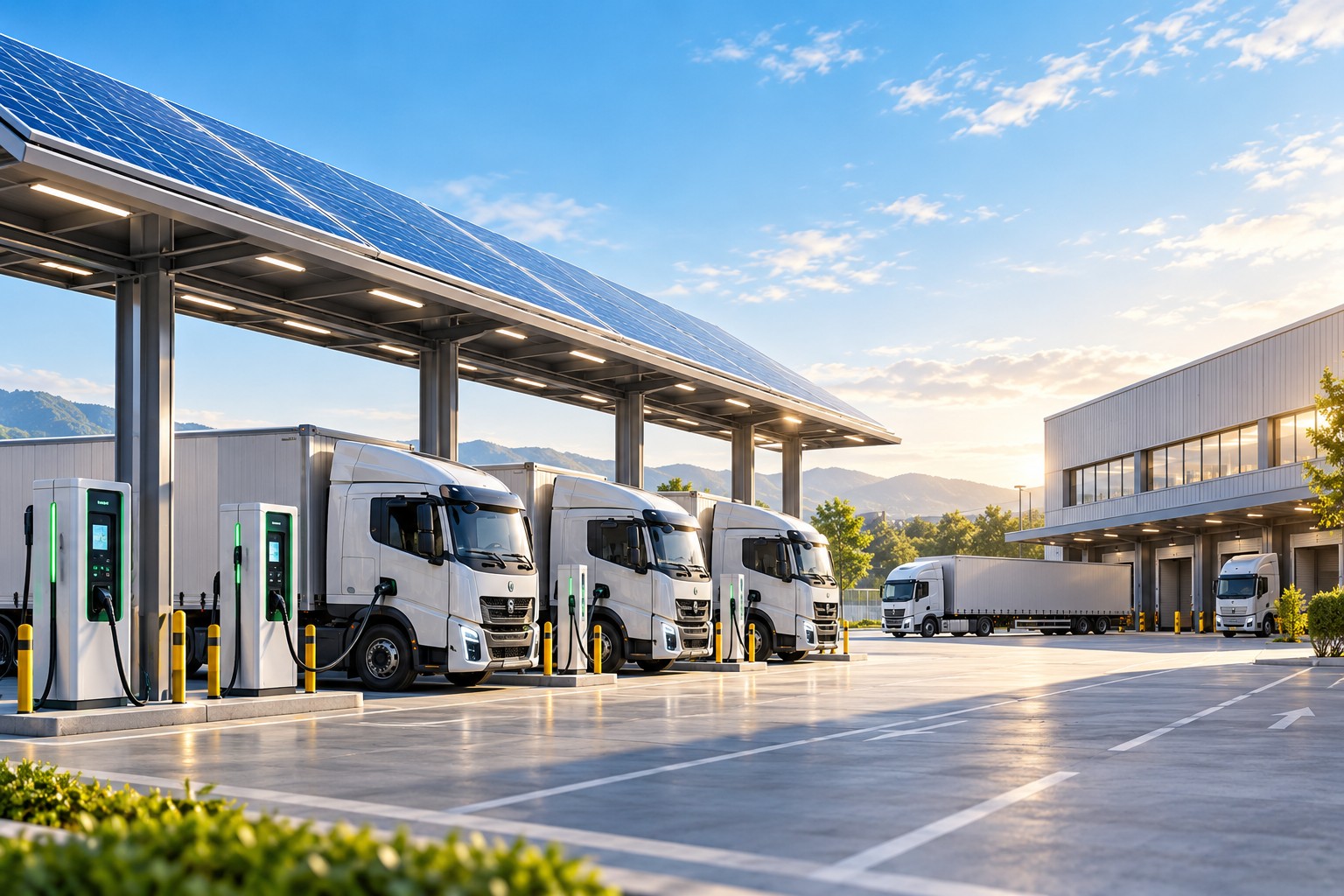
Choosing the right on-site EV truck charging partner is essential to keeping fleet operations safe, reliable, and cost-effective. The system should be designed around fleet size, operating schedules, electrical capacity, and future expansion plans.
Here are 4 checklists businesses should consider before selecting a provider:
1. High-Power DC Fast Chargers Designed for Electric Trucks
Electric trucks have much larger batteries than passenger EVs, requiring high-power DC fast chargers ranging from 150–360 kW to support fleet operating schedules and minimize charging downtime. Businesses should choose a provider that delivers stable power output and supports standardized charging connectors compatible with a wide range of electric truck models, while meeting strict safety requirements.
2. Expert Site Assessment and Grid Integration
Every site has different electrical infrastructure and space constraints. A qualified provider should conduct a detailed site assessment, covering electrical transformers, power distribution systems, and grid integration, before designing the charging infrastructure.
This ensures the chargers and electrical systems are properly sized for the facility’s available capacity, installed safely, and ready to support station expansion.
3. Smart Fleet and Charging Management System
A reliable provider should offer an intelligent platform that integrates fleet and charging management. It should optimize charging schedules around truck operations while using Dynamic Load Management to automatically balance charging power across vehicles and prevent electrical overload.
The system should also support charging during lower-cost Off-Peak periods, helping businesses reduce electricity costs while keeping fleet operations running efficiently.
4. Safety Standards and Reliable After-Sales and Maintenance Support
On-site EV truck charging requires robust safety systems, including automatic emergency shut-off, surge protection, and high-efficiency cooling systems. A reliable provider should also offer comprehensive O&M support and preventive maintenance, with fast response times to minimize downtime and avoid disruption to fleet operations.
The right provider should combine electrical system expertise, fleet operation knowledge, intelligent charging technology, robust safety standards, and responsive after-sales support. By carefully evaluating these 4 checklists, businesses can choose a partner that delivers reliable charging performance, operational efficiency, and long-term value.
Another key consideration is the investment model. Providers that offer an end-to-end service, covering installation and ongoing system management, help businesses avoid large upfront CAPEX, reduce financial barriers, and accelerate the transition to electric truck fleets.
Which On-site EV Truck Charging Provider Should You Choose?
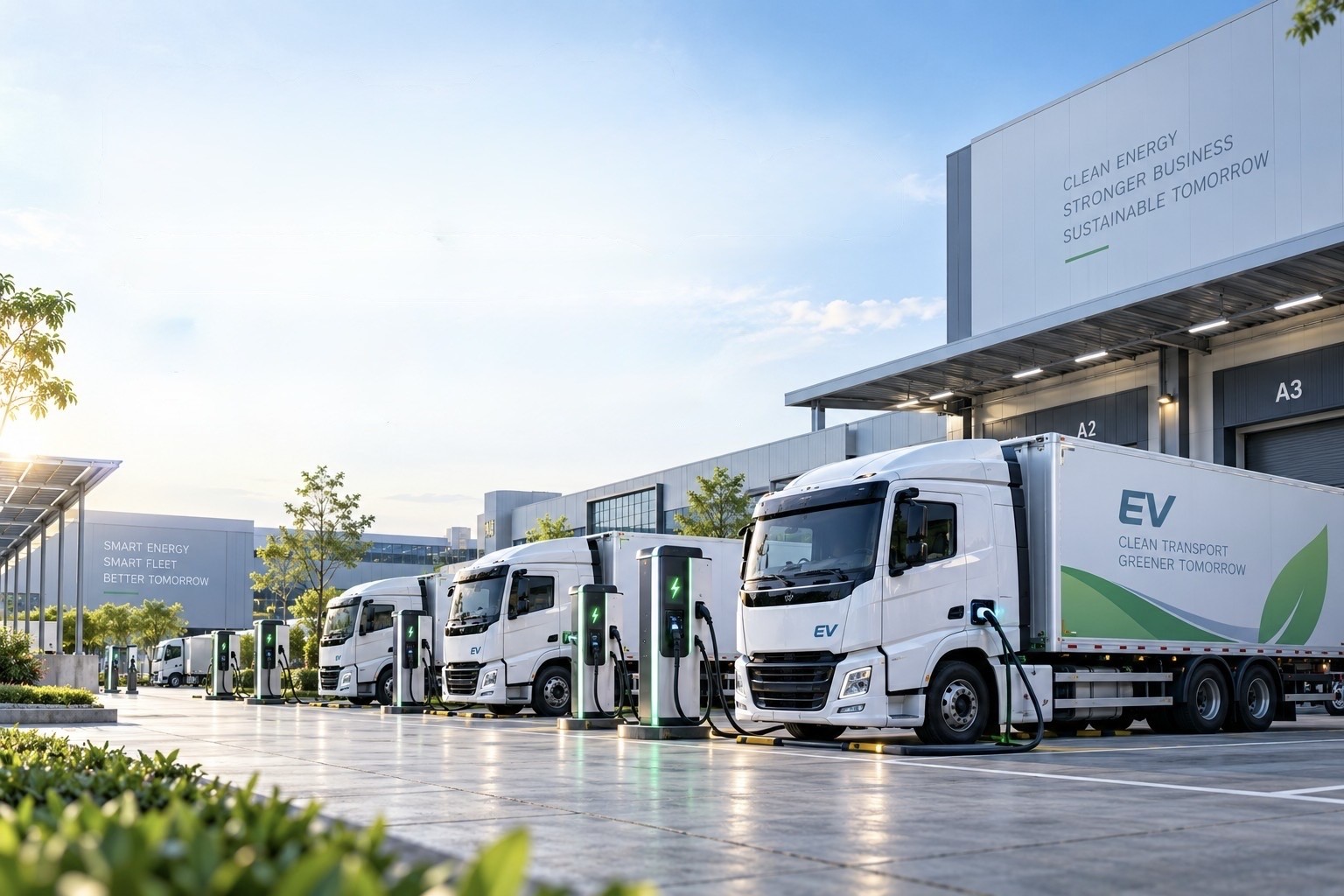
Banpu NEXT is a comprehensive Net Zero Solutions provider, offering two fleet charging solutions designed to support electric trucks and other commercial fleet vehicles—helping transport and logistics businesses accelerate their transition to electric mobility.
- Route Charging
A network of 9 EV truck charging stations strategically located along major logistics corridors, connecting Central, Northeastern, and Eastern Thailand. Locations include Nakhon Sawan, Pathum Thani, Samut Sakhon, Samut Prakan, Saraburi, Nakhon Ratchasima, Khon Kaen, Udon Thani, and Chonburi.
- On-Site Charging at Business Premises with No Upfront Investment
High-power charging stations installed at business locations such as warehouses, distribution centers, industrial facilities, and EV truck depots, with Banpu NEXT handling the investment. The end-to-end service covers site assessment, fleet-based charging system design, equipment installation, fleet management, and after-sales support—helping businesses reduce costs, improve logistics efficiency, and accelerate the transition to electric fleets.
Learn more about Banpu NEXT’s fleet charging solutions here.
Electrify Your Truck Fleet with Confidence, from Vehicles to Charging Through the Right Partner
A successful shift to EV truck fleets requires more than choosing the right vehicles and chargers. Businesses need to assess routes and operating schedules, evaluate charging availability across both public logistics corridors and their on-site locations, select the right charging capacity, manage electrical loads, and ensure strong safety standards and after-sales support.
With the right partner, businesses can control costs, maximize fleet efficiency, and keep logistics operations running smoothly.
Banpu NEXT is a long-term partner in planning and managing electric transport fleets end to end, covering both route charging and on-site charging stations. This integrated approach helps businesses transition to Green Logistics more efficiently, reduce energy costs and carbon emissions, and strengthen long-term competitiveness.
Contact us – Banpu NEXT
Frequently Asked Questions (FAQ)
Q1: Is Installing an EV Truck Charging Station Worth It?
- A: Yes—especially for businesses with large, regularly operated fleets. The energy cost per kilometer for electric trucks can be around 40-60% lower than diesel, depending on fuel and electricity prices. Lower maintenance costs further improve the economics, while charging during Off-Peak hours can reduce electricity costs even more.
Q2: What Are the Benefits of Installing On-Site EV Truck Charging at business premises with Banpu NEXT?
- A: Banpu NEXT provides a fully managed on-site charging solution with no upfront investment from the customer. Banpu NEXT funds the charging infrastructure, while businesses pay an agreed charging rate under the contract.
The system is designed around actual fleet usage, with high-performance chargers to support fast, efficient charging and reliable operations. Businesses also benefit from ongoing expert support and comprehensive after-sales service.
Q3: Where Can EV Trucks Use Public Charging Stations in Thailand?
- A: EV trucks should use high-power DC fast charging stations designed to accommodate large commercial vehicles, with wider parking bays and access lanes suitable for trucks. These stations are typically located along major logistics corridors and industrial routes to support efficient long-distance transport.
Banpu NEXT currently operates EV truck charging stations across 9 provinces along key transport routes: Samut Prakan, Pathum Thani, Khon Kaen, Udon Thani, Samut Sakhon, Nakhon Sawan, Saraburi, Nakhon Ratchasima, and Chonburi.