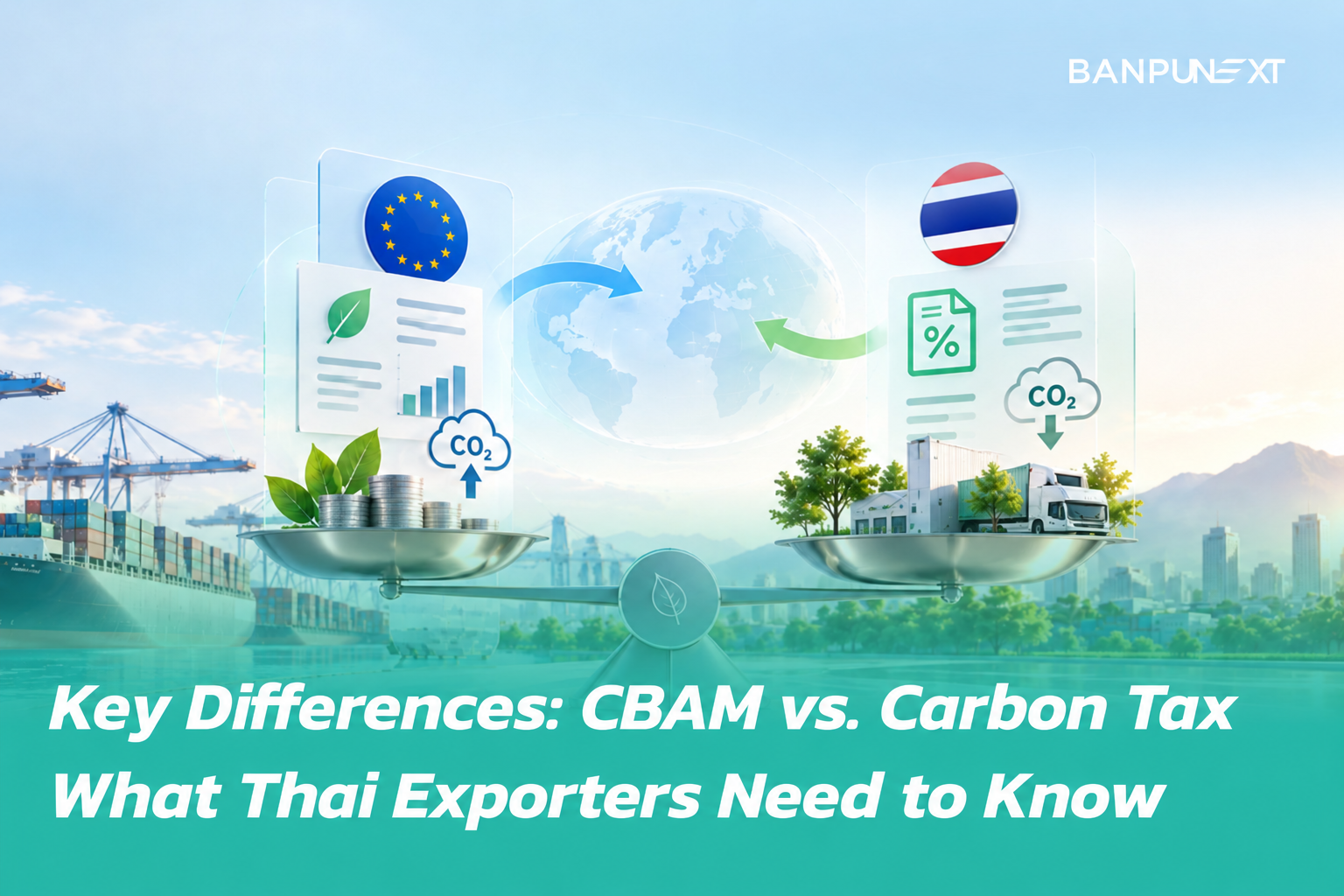
CBAM and Carbon Tax are carbon pricing mechanisms that operate differently. CBAM (Carbon Border Adjustment Mechanism) is an EU measure that places a carbon cost on certain goods imported into the European Union. Producers in exporting countries must provide data on the embedded emissions of their products, while EU importers are responsible for reporting this information and purchasing CBAM certificates based on the level of embedded carbon.
A Carbon Tax is a tax imposed by individual countries on domestic carbon emissions. Its purpose is to encourage businesses to adopt cleaner energy technologies, improve production efficiency, and reduce overall carbon emissions.
Today, manufacturing and export competitiveness is no longer driven by price and product quality alone. Carbon emissions across the production process are becoming an increasingly important factor, as measures such as CBAM and carbon tax regulations can raise costs for carbon-intensive products.
For factories exporting to the EU, this means having clear, verifiable carbon footprint for both the organization and its products, while accelerating structured decarbonization efforts. These measures can directly affect pricing, competitiveness, and business opportunities in both domestic and international markets.
Why Thai Exporters Need to Prepare for CBAM and Carbon Tax
The global economy is moving toward decarbonization and the achievement of Net Zero targets. In response, many countries are introducing regulations and trade measures that push businesses to reduce greenhouse gas emissions across the entire supply chain—from raw material sourcing, production, energy consumption, transportation, and final delivery.
These pressures extend beyond large businesses and industries in countries where the regulations originate. They also affect suppliers and manufacturers across global supply chains. Thai exporters increasingly need to disclose the carbon footprint of their products, prepare greenhouse gas inventories, and improve their production processes to reduce carbon emissions. Without reliable, verifiable carbon footprint, businesses may face higher costs, lose trade opportunities, or find it harder to compete with lower-carbon producers.
Although CBAM and Carbon Tax share the same goal—making greenhouse gas emitters account for their environmental impact—they work in different ways. CBAM applies a carbon cost to certain goods imported into the EU, helping align their carbon costs with those faced by EU-produced goods. A Carbon Tax, by contrast, is imposed domestically based on carbon emissions or the use of fuels that generate greenhouse gases.
CBAM and Carbon Tax are turning greenhouse gas emissions into a direct business cost. Businesses should therefore strengthen emissions data while developing a clear reduction strategy—from improving production efficiency and optimizing energy consumption to adopting clean energy solutions and building a long-term roadmap toward Net Zero goals.
Taking action early can help reduce cost exposure, maintain relationships with international partners, and strengthen competitiveness in global markets.
Key Differences between CBAM vs Carbon Tax
| Comparison | CBAM (Carbon Border Adjustment Mechanism) | Carbon Tax |
| Scope | Cross-border, applying to certain goods imported into the EU | Domestic, applying to producers and/or fossil fuel use within a country |
| Who Pays | EU importers, who may be passed the carbon cost on to exporters | Domestic emitters, including both producers and consumers |
| Primary Objective | Prevent carbon leakage, where carbon-intensive production moves from the EU to countries with weaker carbon regulations | Encourage domestic businesses to reduce carbon emissions |
| How the Cost Is Calculated | Based on the EU ETS carbon price and the product’s embedded emissions. | Based on a per-ton carbon tax rate set by the government |
CBAM targets the embedded carbon in goods imported into the EU, while a Carbon Tax is designed to encourage businesses to reduce domestic emissions. Thai exporters should therefore keep track of both carbon regulations in their target markets and evolving domestic carbon tax policies.

Thai Exporters Can Prepare with a Corporate Net Zero Strategy
Thai exporters can prepare for growing pressure from both CBAM and Carbon Tax by embedding carbon management into their business operations from the outset. This includes assigning clear ownership, connecting data across production, energy, procurement, logistics, and finance, and incorporating carbon considerations into business decisions.
A structured Net Zero strategy can help reduce exposure to domestic carbon costs while also lowering additional costs associated with CBAM in the European market.
A Practical Roadmap to Net Zero for Businesses
1.Assess
Build a comprehensive greenhouse gas inventory by calculating both the Carbon Footprint for Organization (CFO) and Carbon Footprint of Product (CFP). This helps identify key emission sources across all scopes.
2.Target
Set greenhouse gas reduction targets aligned with internationally recognized frameworks such as the Science Based Targets initiative (SBTi). Define both near-term targets and a long-term Net Zero goal.
3.Reduce
Lower emissions by improving production processes, adopting clean energy solutions such as solar power, Battery Energy Storage Systems (BESS), and EV fleet solutions, and improving energy efficiency through AI-powered technologies and energy management systems.
4.Offset & Report
Use carbon credits to offset residual emissions that cannot yet be reduced, while preparing carbon footprint and ESG reports to ensure transparent and verifiable disclosure. Businesses can also pursue internationally recognized certifications or verification from the Thailand Greenhouse Gas Management Organization (TGO) to strengthen data credibility and support compliance with customer requirements and CBAM.
Achieving Net Zero goals requires a structured, ongoing approach—from assessing emissions and setting targets to reducing, offsetting, and reporting them transparently. Strong internal systems and reliable carbon footprint management can help Thai manufacturers and exporters manage costs associated with CBAM and Carbon Tax while maintaining competitiveness in global markets.

Carbon Reduction Implementation and Clean Energy Transition: Choosing a Net Zero Partner in Thailand
Effective decarbonization starts with targeting the right emission sources across Scopes 1, 2, and 3. This may include deploying solar power integrated with Battery Energy Storage Systems (Solar + BESS), transitioning diesel fleets to EV Fleet Solutions, and improving energy efficiency across factories and buildings.
Businesses should therefore choose an expert Net Zero and energy technology partner with end-to-end capabilities—from consulting and system design to installation, monitoring, and ongoing performance management.
Net Zero Solutions Provider in Thailand
Banpu NEXT provides end-to-end Net Zero Solutions, combining Net Zero consultation with a full range of smart clean energy solutions. These include solar power integrated with Battery Energy Storage Systems (BESS), EV fleet and charging solutions, and energy efficiency solutions such as AI-controlled chiller systems. Together, these solutions help organizations reduce carbon emissions across Scopes 1, 2, and 3 while improving overall energy efficiency.
Combining carbon management consulting with clean energy solutions from an expert partner can help businesses strengthen operational standards, reduce the burden of carbon costs, and create sustainable growth opportunities.
Turning Carbon Regulations into Business Opportunities
While CBAM and Carbon Tax may increase production costs and create new business challenges, early action can turn regulatory pressure into opportunity. By developing a clear Net Zero strategy and working with an expert and experienced provider such as Banpu NEXT, businesses can assess their carbon footprint, improve energy efficiency, transition to clean energy, and track emissions reductions systematically.
This approach can help organizations prepare for stricter carbon regulations, lower energy costs, strengthen partner confidence, and turn trade requirements into opportunities for long-term growth.
Contact us – Banpu NEXT
Frequently Asked Questions (FAQ)
Q1: If a Carbon Tax Has Already Been Paid Domestically, Does CBAM Apply Again?
- A: Not necessarily. If a carbon price has already been effectively paid in the exporting country and qualifies under EU CBAM rules, EU importers may deduct that amount when calculating the number of CBAM certificates they are required to surrender, subject to the conditions set by the EU. (Regulation (EU) 2023/956, Article 9)
Q2: Do Businesses That Do Not Export Directly to the EU Still Need to Prepare for CBAM?
- A: Yes—especially if they are part of a supply chain serving companies that export to the EU. Exporters may require suppliers, including SMEs, to provide embedded emissions data for raw materials and production processes to support CBAM reporting. Suppliers with higher carbon emissions may also face greater competitive pressure as buyers increasingly prioritize lower-carbon partners.
Q3: How Can Banpu NEXT Help Businesses Achieve Their Net Zero Goals?
- A: Banpu NEXT provides end-to-end Net Zero Solutions, covering Net Zero planning, clean energy solutions, and carbon credit services. This integrated approach helps businesses reduce greenhouse gas emissions in a measurable and actionable way while progressing toward their Net Zero goals.