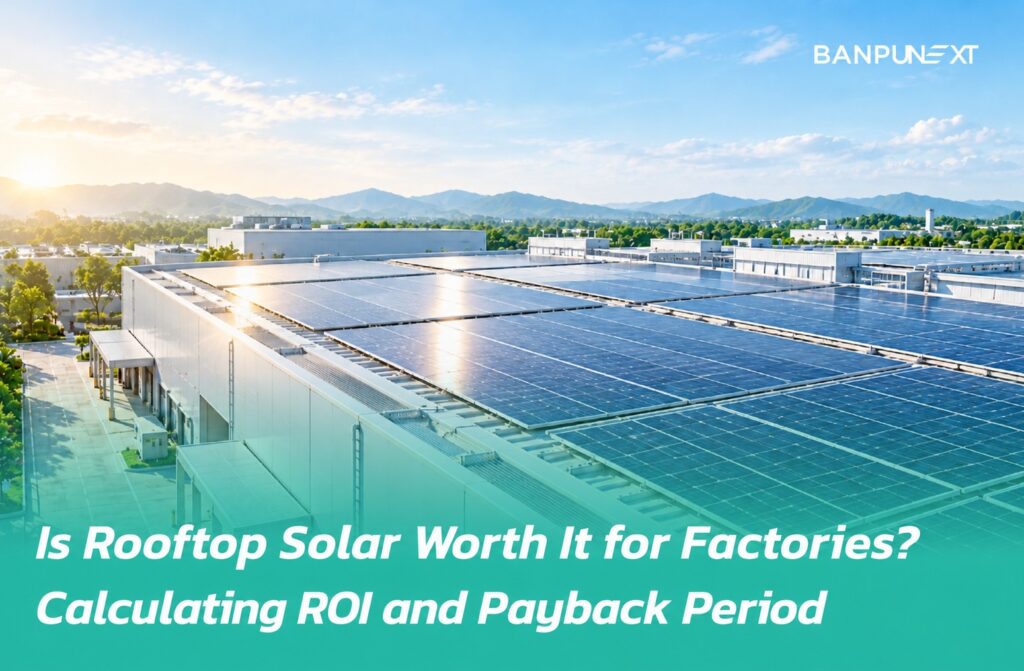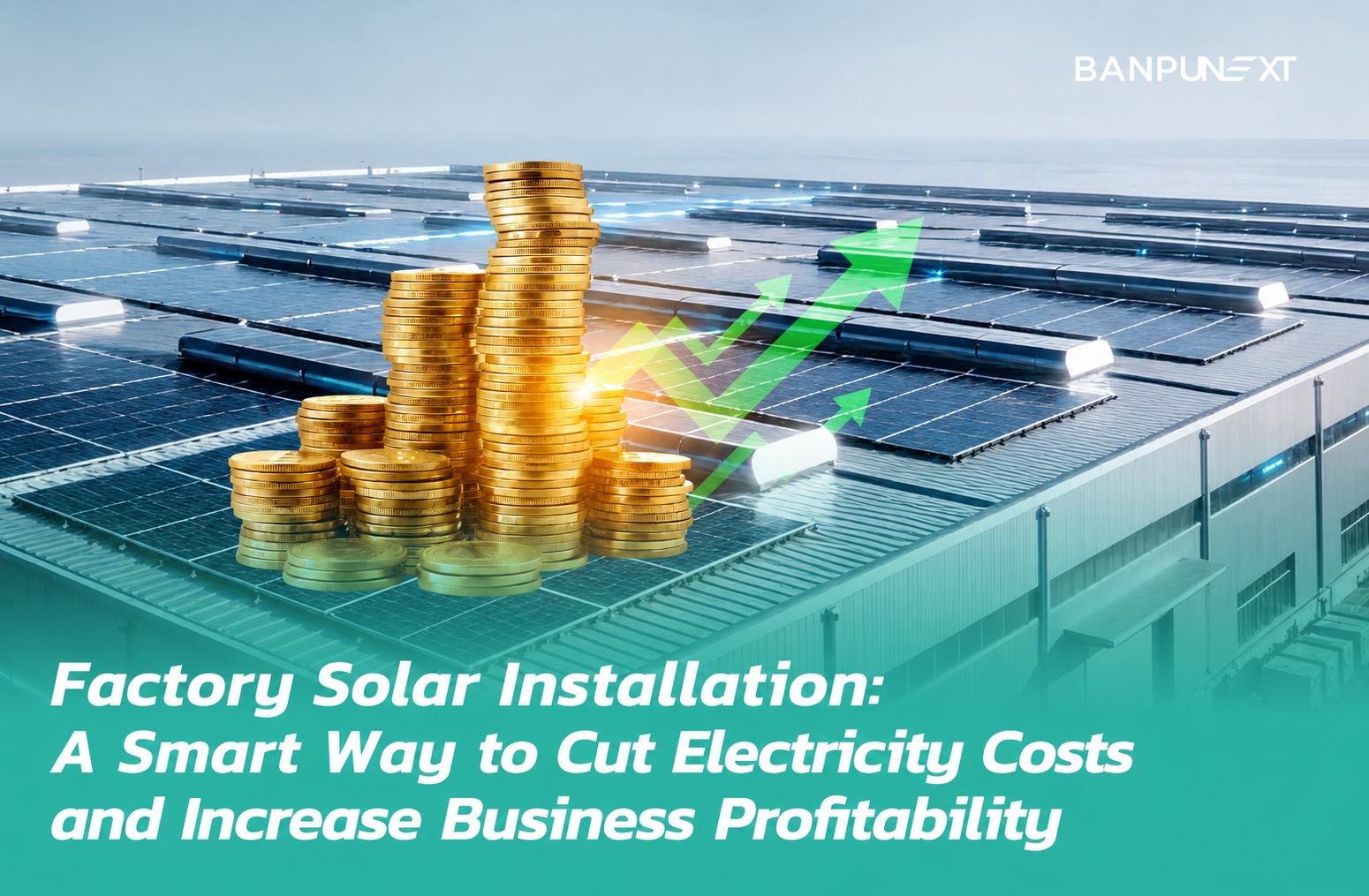
Installing solar panels for factories is one of the most effective ways for businesses to manage energy costs, reduce electricity expenses, and create long-term value from energy consumption—especially when energy costs continue to fluctuate and have become one of the major expenses for the industrial sector.
Today, many organizations no longer view solar installation merely to generate electricity for self-consumption. Instead, they see it as part of a broader cost management strategy and a way to strengthen business competitiveness. Unused spaces such as rooftops, ground areas, or water surfaces can be transformed into a source of solar power generation that reduce reliance on external electricity sources and continuously lower energy expenses.
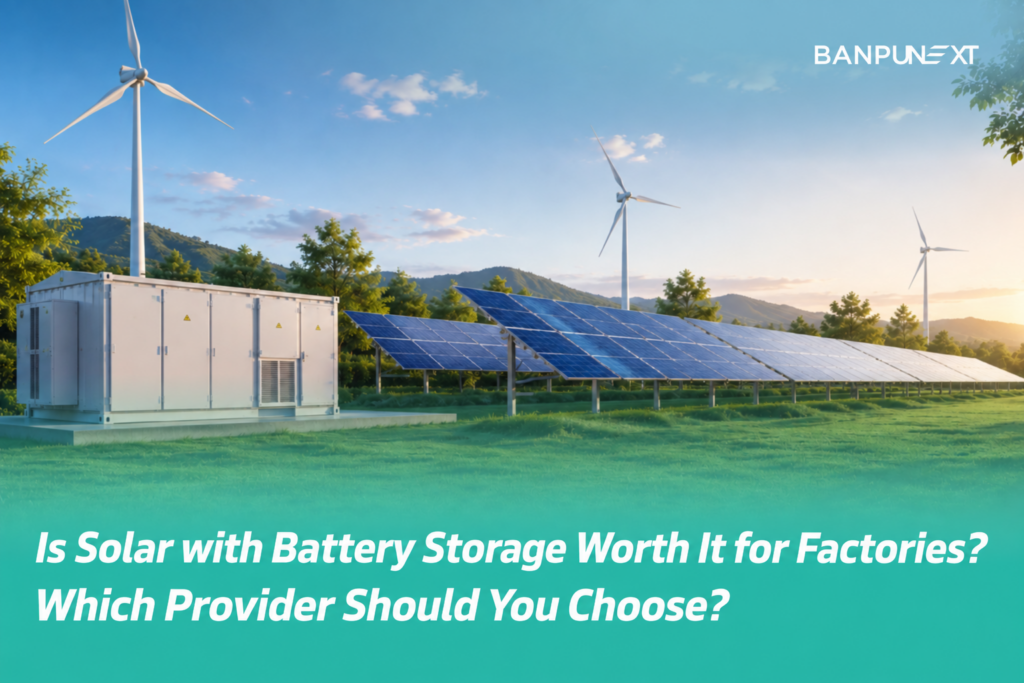
In addition, many organizations choose to install factory solar systems together with an Energy Storage System (ESS), or battery storage, to further improve energy efficiency. These systems can store excess electricity generated during the day and reuse it during periods of high electricity demand. This helps increase energy flexibility, enhance power system stability, and support more efficient use of clean energy.
Choosing an expert end-to-end factory solar installation provider also helps businesses design a system that matches their electricity usage profile, accurately assess investment value, and plan energy management more effectively. This supports long-term energy cost reduction and sustainable business growth.
4 Benefits of Factory Solar Systems That Help Reduce Costs and Improve Business Efficiency
Investing in factory solar installation does not only reduce long-term energy expenses. It also improves operational efficiency, strengthens competitiveness, and supports the organization’s long-term sustainability goals. Key benefits include:
1. Lower Electricity Costs
Installing factory solar panels allows businesses to generate and use electricity from solar energy, reducing grid electricity consumption. This helps lower energy expenses and enables more efficient electricity cost management, especially for businesses with high daytime electricity consumption.
2. Improve Energy Efficiency Within the Factory
Most factories consume a high amount of energy during the day, which is also when solar systems can generate electricity most efficiently. Using solar-generated electricity within the organization therefore helps reduce energy costs directly.
In addition, when installed together with an Energy Storage System (ESS) or battery storage, the system can provide greater flexibility in energy management. Stored energy can be used during on-peak demand or when solar generation is lower, helping improve overall energy efficiency.
3. Reduce Carbon Emissions (CO₂) and Support Net Zero Goals
Amid rising environmental expectations from customers, investors, and global business partners, using solar energy is one of the methods to reduce greenhouse gas emissions and lower an organization’s carbon footprint.
Beyond supporting sustainability and Net Zero goals, solar energy also helps organizations prepare for future environmental and international trade measures that increasingly emphasize carbon reduction.
4. Solar Installation with Battery May Qualify for BOI Incentives
The government provides investment promotion methods to improve energy efficiency in the industrial sector. Businesses that invest in solar systems together with energy storage systems or battery storage may be eligible for corporate income tax exemptions of up to 50% of the investment value for a period of three years, subject to BOI conditions.
These incentives can increase investment value and may help shorten the project’s payback period. However, businesses should study BOI details, criteria, and conditions carefully before making an investment decision.
Factory solar installation is therefore not just a short-term way to reduce electricity bills. It is a long-term energy investment that improves operational efficiency, supports sustainability goals, and creates lasting value for businesses—especially when the system is properly designed to match each organization’s energy consumption profile and supported by comprehensive energy management planning.
Understanding the Payback Period: If You Invest Today, When Will It Become Worth It?
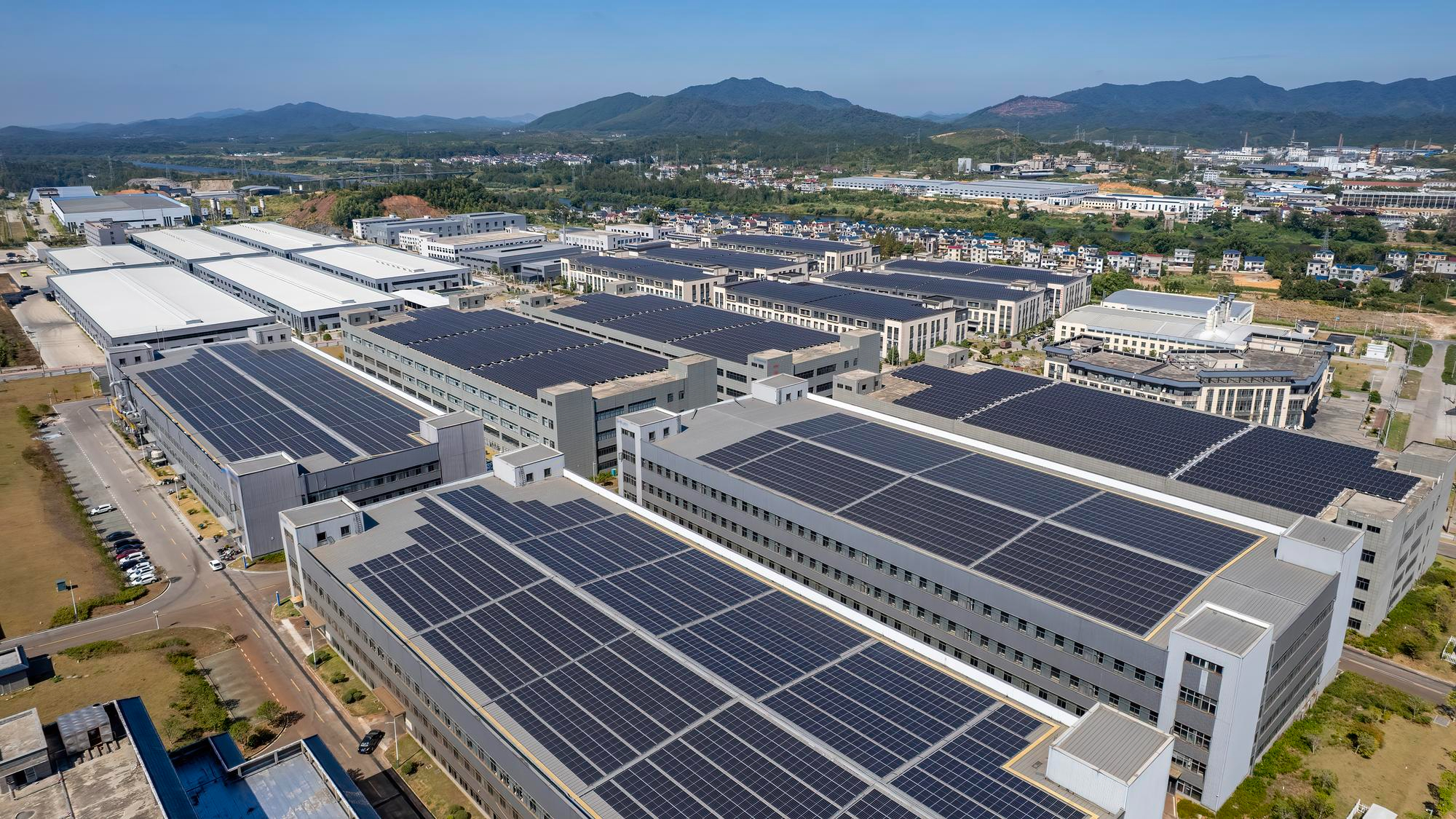
The payback period for factory solar installation depends on several factors, including the size of the installed system, the factory’s electricity consumption pattern, and the proportion of electricity consumed during daytime hours when the solar system can generate power directly. The higher the factory’s daytime energy consumption, the faster the investment is likely to pay back.
Another key factor is the investment model. Today, businesses can choose between self-investment (CAPEX), which allows them to own the system from the beginning and benefit fully from solar-generated electricity, or a provider-funded model (PPA), where the business does not need to make an upfront investment but can still reduce electricity costs immediately. This helps lower the burden of capital investment and improves financial flexibility.
In general, factory solar installation currently has an average payback period of around 3–5 years, depending on the size of solar installation, each business’s energy consumption, tax incentives, and government support measures. With a well-designed system from an expert partner such as Banpu NEXT, businesses can potentially shorten the payback period and increase long-term return on investment more clearly.
A Cost-Effective Solar System Does Not End on Installation Day
Investing in solar system for the industrial sector is not merely about installing equipment, but about building a long-term energy management system that requires strategic management. One of the key elements is real-time monitoring of electricity generation and consumption, enabling businesses to analyze data and adjust machinery operation schedules to align with peak solar generation hours. This helps maximize cost reduction more accurately.
At the same time, regular system care and maintenance are essential for keeping factory solar power generation stable and efficient. Panel cleaning and system inspections help reduce energy losses caused by equipment degradation over time, allowing the system to operate at full capacity and extend its useful life for maximum investment value.
In addition, choosing a factory solar installation provider that designs flexible system architecture can help support future technology upgrades, such as Battery Energy Storage Systems (BESS). These systems improve continuity of electricity consumption by storing excess solar energy, allowing factories to manage and reserve clean energy for both daytime and nighttime use. This helps increase investment value and create sustainable long-term profitability for the business.
Why an End-to-End Energy Management System Helps Businesses Manage Costs More Effectively
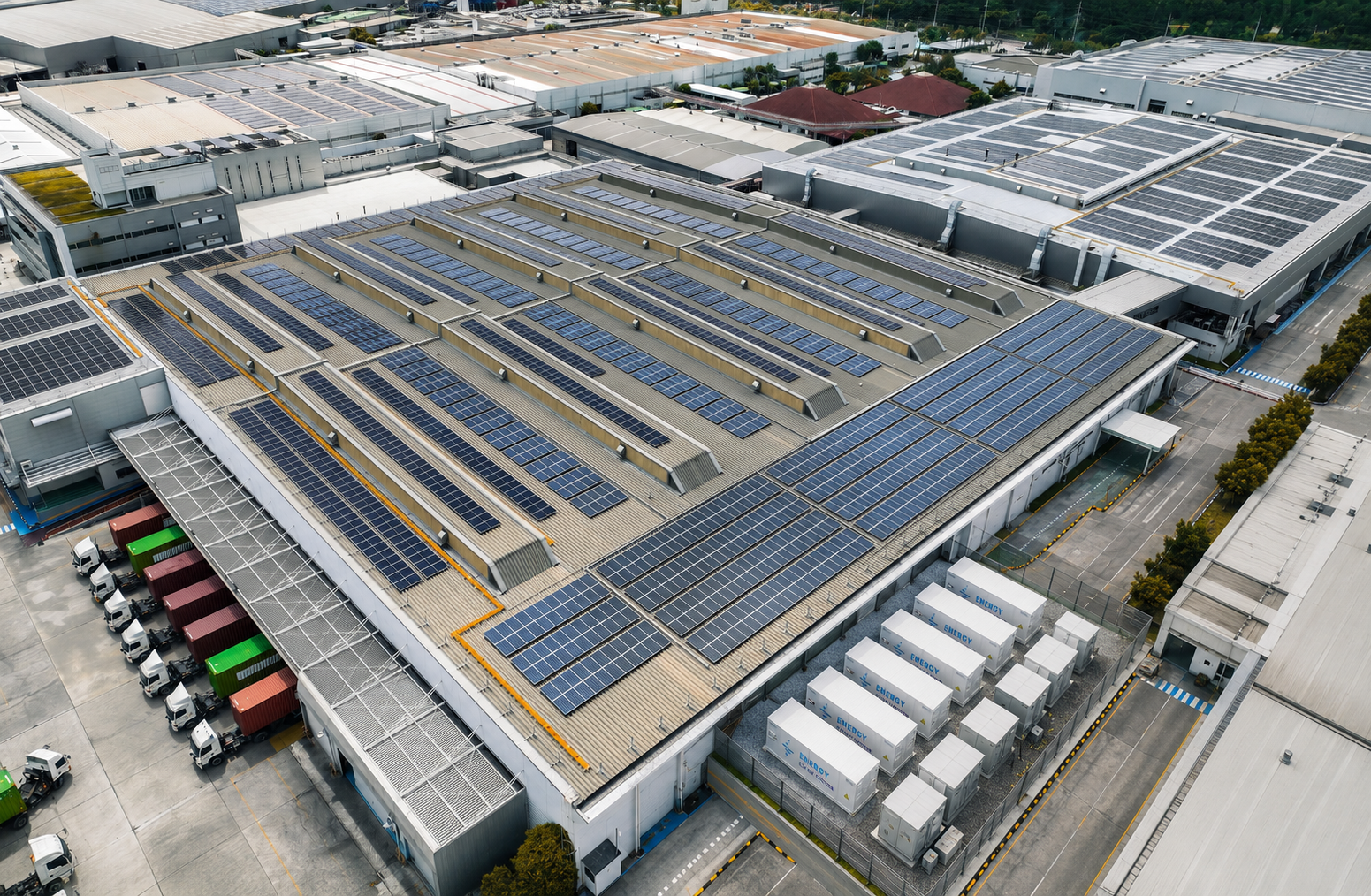
Managing factory energy costs is not just about installing solar panels or choosing energy-efficient equipment. It also depends on designing an energy system that aligns with the business’s actual electricity consumption profile and demand patterns. An end-to-end energy management system enables businesses to use energy efficiently, reduce unnecessary energy losses, and maximize the return on investment.
Another key factor is the ability to integrate all energy data into a single platform—whether it is electricity generated from solar panels, energy consumed within the factory, power stored in an Energy Storage System (ESS), or grid electricity. With all data integrated into a digital platform, businesses can monitor and analyze energy consumption in real time, allowing them to plan and optimize energy management with greater accuracy.
In addition, having a trusted expert oversee the project from design and installation to system management and maintenance helps reduce operational complexity and minimize long-term risks. This gives businesses confidence that their energy system will be continuously supported and ready for future expansion—whether through additional battery storage or integration with energy management systems—to further improve efficiency and long-term investment value.
End-to-End Solar and Battery Installation with Banpu NEXT
Factory solar installation becomes even more valuable when combined with energy storage system and effective energy management. Banpu NEXT provides end-to-end clean energy solutions—from system design and solar installation to ESS integration and continuous energy management, helping businesses maximize energy efficiency and long-term value. Each system is designed around the organization’s specific energy consumption profile to ensure the most suitable solution.
Banpu NEXT also offers flexible investment models, including self-investment for businesses that want full system ownership, as well as provider-funded models where Banpu NEXT makes the investment, helping reduce upfront capital requirements while allowing businesses to receive electricity cost savings based on agreed contract terms from the start of system operation. Under both investment models, businesses gain access to intelligent energy monitoring and management systems, providing real-time visibility into energy consumption and enabling more accurate energy planning.
Banpu NEXT’s solutions do more than reduce energy costs. They also support decarbonization goals and help organizations move toward Net Zero—allowing businesses to strengthen competitiveness, reduce energy-related risks, and build long-term sustainability at the same time.
Conclusion: Start Today for a More Sustainable Future and Tangible Business Returns
Solar energy is not just a way to reduce electricity bills. It also helps businesses manage energy costs more effectively, improve operational stability, reduce exposure to electricity price volatility, and support long-term sustainability goals. When combined with an Energy Storage System (ESS) and energy management systems, the value and efficiency of the investment can be enhanced even further.
Choosing a provider that can support the entire journey—from system design and installation to energy management and long-term maintenance—helps businesses achieve greater return on investment and manage energy costs more effectively.
Contact us – Banpu NEXT
Calculate solar installation – Banpu NEXT
FAQ
Q1: Will installing a factory solar system require production line to stop?
A: In most cases, factory solar installation does not disrupt internal operations because the work is typically carried out on the rooftop, and electrical system connections can be planned during factory downtime or periods of lower electricity demand.
Q2: How do BOI incentives for solar and battery systems help businesses save cost?
A: At present, installing a solar system alone may not qualify for BOI incentives under energy efficiency improvement measures. However, if the solar system is installed combined with an Energy Storage System (ESS) or battery storage, certain types of businesses may be eligible to apply for tax incentives. These may include corporate income tax exemptions of up to 50% of the investment value for three years, subject to BOI criteria and approval.
Q3: How long does a solar system last, and is it really worth the investment?
A: In general, solar systems have a lifespan of more than 25 years, while the average payback period is around 3–5 years depending on the size of installation, electricity consumption patterns, and the investment model chosen by the business. Once the system reaches payback, the business can continue benefiting from self-generated electricity throughout the lifespan of the system, making it a strong long-term energy cost reduction investment.
Q4: If the business has a limited budget, is solar installation still possible?
A: Yes. Today, there are multiple investment options available, including self-investment and provider-funded models such as Power Purchase Agreements (PPA), which help reduce upfront capital requirements. Under a PPA model, the business pays for electricity based on actual usage at an agreed rate. The most suitable approach should be selected based on the organization’s energy usage consumption profile and business objectives.