When transportation businesses must accelerate the transition to electric vehicles, many organizations may worry about how to manage EV fleets cost-effectively, because electric vehicles are more complex than fuel vehicles in that they require consideration of battery health, charging planning, and energy costs that fluctuate by time period.
The answer lies in “data,” which has become the most valuable resource for modern transportation operators. Those who can use data effectively will save costs sooner and gain a competitive advantage sooner. EV Fleet Management systems were therefore developed to connect all data together, from vehicle status and energy consumption to driver behavior, with Telematics systems and Energy Management Systems (EMS) as the core components.
What are Telematics and Energy Management Systems?
Get to know the two main technologies that enable EV Fleet Management to operate efficiently.
– Telematics is a system installed in vehicles to collect and transmit real-time data via the internet.
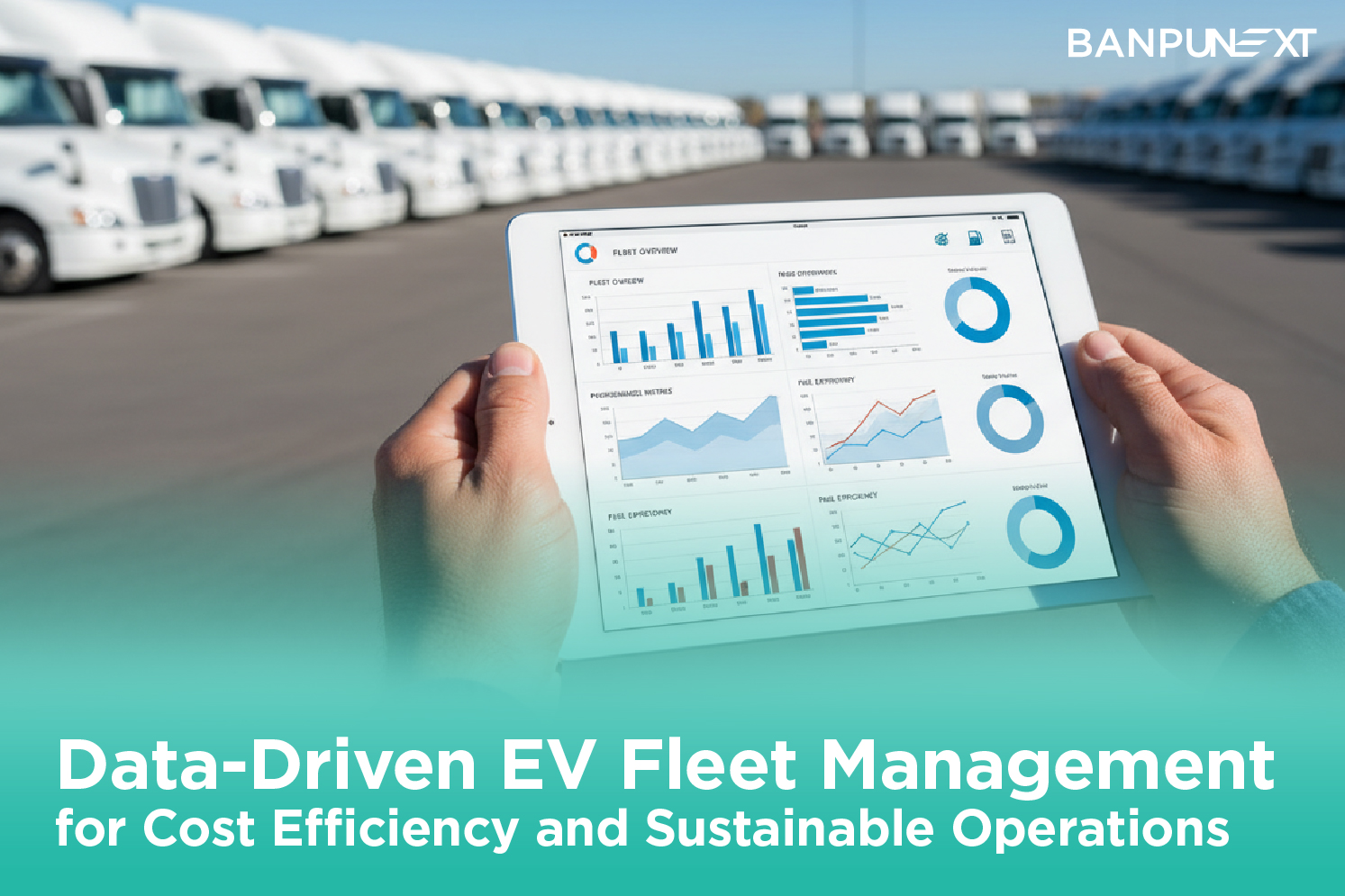
Data obtained from the Telematics system: covers GPS location, speed, distance traveled, charging status, and driving behavior such as sudden braking or hard acceleration. This data allows fleet managers to see the status of all vehicles from a single screen.
– EMS stands for Energy Management System, a system designed specifically to control and analyze the electricity usage of EV fleets.
Data obtained from the EMS system: charging/discharging data, battery health data, analysis of electricity costs in each time period (Peak/Off-Peak), and recommendations for the most cost-efficient charging times, including total electricity consumption of the entire fleet, comparison of performance between vehicles, and real-time grid condition monitoring to avoid charging during Peak Demand periods.
When both systems work together, driving and energy data are fully integrated. For example, the system can calculate which vehicle uses unusually high energy on certain routes, or which driver’s behavior causes the battery to drain faster, enabling operators to make accurate and timely decisions.
Examples of Data That Truly Reduce Costs
EV fleet management systems generate a vast amount of data. The following data sets are key data in directly impacting business costs and operational efficiency.
- Battery SOC and SOH: SOC (State of Charge) is the remaining energy level in the battery, similar to a fuel gauge, while SOH (State of Health) indicates how healthy the battery is compared to when it was new. Tracking these values enables proactive battery replacement before performance degrades to an unusable level, reducing the risk of vehicles stopping mid-route and disrupting goods delivery.
- Charging data: The system records when each vehicle charges, how much electricity is consumed, and the cost of each charging session. Importantly, it can compare electricity costs during Peak (higher-cost electricity) and Off-peak (lower-cost electricity) periods. This allows fleet operators to schedule charging during the most cost-effective times, potentially reducing total electricity costs by up to 30–40%.
- Route and driving data: The system analyzes daily routes, including distance, number of stops, cargo weight, and road conditions, such as uphill routes that consume more energy than usual. This data helps optimize route planning to maximize energy efficient and select appropriate supplementary charging points along the way.
- Energy efficiency data: The system calculates energy consumption in kilowatt-hours per kilometer for each vehicle. If a vehicle consumes unusually high energy compared to others, it may indicate a technical issue that needs inspection or inefficient driving behavior.
Measurable Business Benefits
When this data is used systematically, businesses gain tangible benefits in several areas.
- Reduced downtime: For transportation businesses, every hour a vehicle is not operating is lost revenue. When you know battery status and charging schedules in advance, you can manage better, such as fully charging vehicles before dispatch or scheduling maintenance during non-urgent periods, ensuring vehicles are always ready to operate.
- Lower electricity costs: Electricity prices in Thailand vary by time period. Peak hours (09:00–22:00, Monday–Friday) are significantly more expensive than Off-peak periods. EMS systems help schedule charging during the cheapest periods, enabling businesses to save energy costs significantly.
- Improved driver efficiency: The system records historical driving behavior data, such as who brakes suddenly frequently, who accelerates too hard, or who chooses inappropriate routes. This data can be used to create driver training guidelines for more energy-efficient driving, which not only reduces costs but also allows vehicles to travel farther per single charge.
Banpu NEXT and EV Fleet Solutions for Smart Cost Management
Banpu NEXT, a Net Zero Solutions provider in the Asia-Pacific, understands the challenges transportation businesses face in transitioning to electric vehicles and therefore develops comprehensive e-Mobility services that cover every operational need.
- Commercial EV Fleet Leasing Service: For businesses seeking a transition to electric transport vehicles without the need for large upfront capital investment, our EV fleet leasing services provide flexible access to electric vehicles. Fleet size can be adjusted according to operational requirements, enabling greater financial and operational agility.
- Digital Platform for Fleet Management: An intelligent digital platform that consolidates data from all vehicles into a single system. You can monitor SOC and SOH in real time, analyze driving behavior, optimize routes for energy efficiency, and track charging costs at any time, supporting data-driven business decisions.
- Charging station network: A nationwide network of high-speed charging stations strategically located along major transportation routes, with a reservation system that helps you plan routes confidently, reduce charging wait times, and ensure charging points are available upon arrival.
- Consulting and data analysis services: Our team of experts provides in-depth analysis of energy usage and operation data to ensure that the transition to an EV fleet delivers real cost savings while supporting the organization’s Net Zero goals.
Move Your Business Toward Net Zero Starting Today
Ready to achieve Net Zero with EV Fleet solutions that reduce costs and increase efficiency? Contact our expert team today.