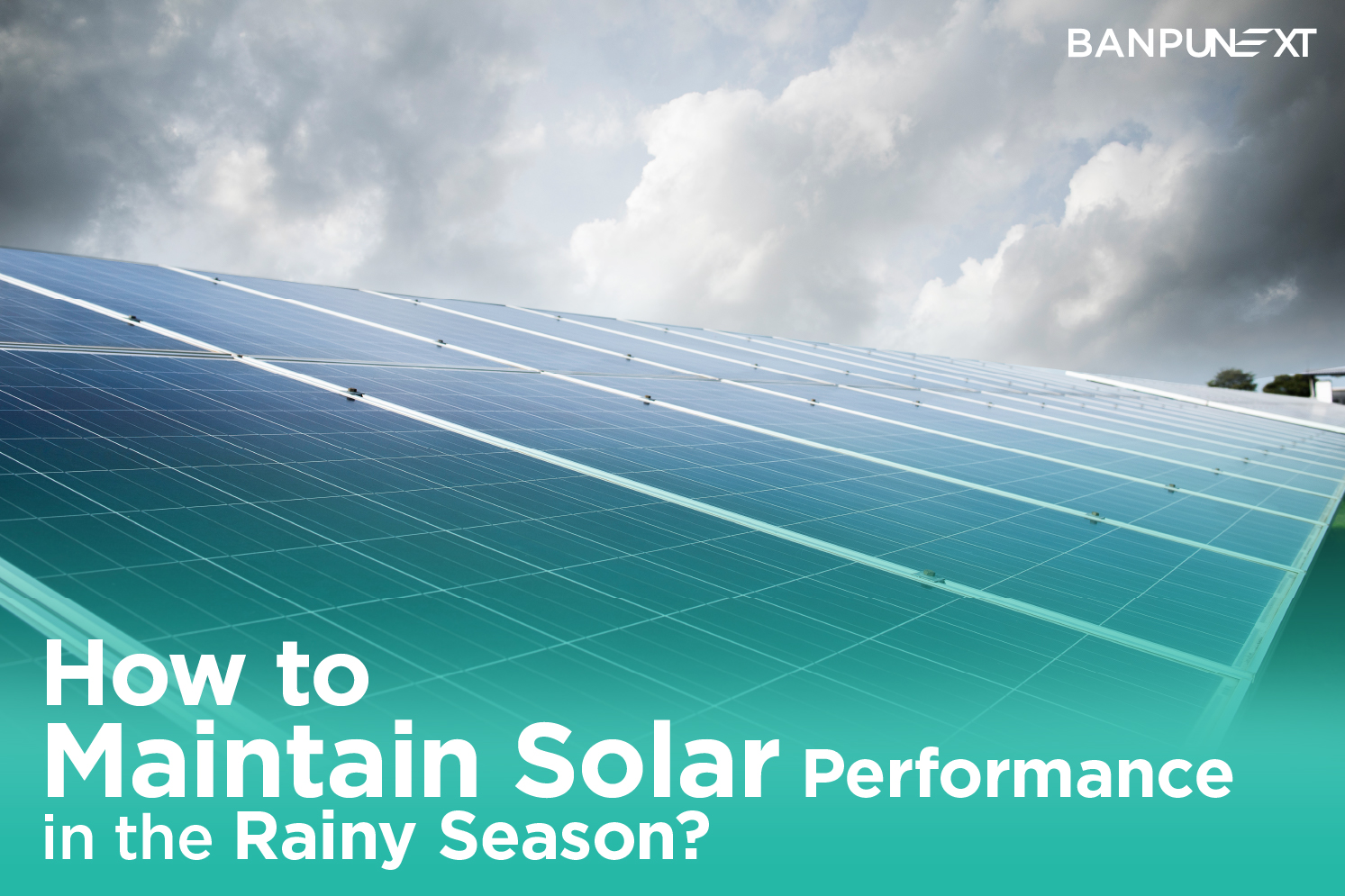
During the rainy season or periods of unpredictable weather, many businesses that have invested in solar power or installed solar may experience reduced energy output, faster equipment deterioration, or even electricity bills that do not decrease as expected. The main causes are rain, cloud cover, humidity, and extreme weather conditions, all of which directly affect solar panels and system performance. Without proper system design and ongoing maintenance, these factors can prevent your solar investment from delivering the expected returns.
Common Solar Problems During the Rainy Season
The rainy season brings several challenges for solar systems. Understanding the issues and knowing the right solutions will help your system perform efficiently all year round.
Reduced Sunlight Due to Clouds and Rain
Thick clouds and rain significantly decrease the amount of sunlight reaching the solar panels, leading to lower electricity generation on cloudy or rainy days.
Solutions:
- Choose panels optimized for diffuse light – Newer models perform better under low or scattered sunlight.
- Design the system to handle lower output periods – Plan energy usage according to times of reduced production.
- Use a backup Battery (ESS) – Energy storage ensures power availability when solar output drops.
Rain Doesn’t Fully Clean the Panels
While rain does help remove some dust, it often can’t wash away stubborn dirt such as oil stains, soot, or bird droppings, causing panel efficiency to drop.
Solutions:
- Clean areas that rain cannot reach – Schedule regular cleaning, especially after the rainy season or dust storms.
- Optimize the panel tilt angle – A proper tilt allows rainwater to flow off easily, carrying dirt away.
- Use automated cleaning systems – Such as robotic cleaning that maintains panels without manual labor.
Moisture Build-Up Causing Leaks or Water Accumulation
High humidity in the rainy season can cause moisture intrusion into panels or electronic components, leading to short circuits or long-term damage.
Solutions:
- Ensure proper drainage – Design effective water drainage to prevent pooling.
- Increase the gap between panels and the roof – This improves airflow and reduces moisture buildup.
- Inspect seals regularly – Check panel seals and control boxes to prevent water leakage.
- Provide adequate panel tilt – A proper slope helps water flow off easily.
Hot Spots from Localized Dirt and Debris
When part of a panel is blocked by dirt or debris, the affected cells heat up abnormally (Hot Spot), potentially causing permanent damage.
Solutions:
- Inspect with thermal imaging – Identify hot spots early before damage occurs.
- Perform routine hot-spot checks – Regular inspections help prevent issues before they escalate.
- Use coatings or cooling systems – Special coatings or ventilation systems can reduce heat buildup.
Storms, Strong Winds, or Hail Causing Structural Damage
Extreme weather, such as storms or strong winds, can loosen or damage solar panel structures. Hail can also crack the panel glass.
Solutions:
- Choose robust structures – Use standard-certified, weather-resistant materials.
- Use protective materials – choose panels with tempered-resistant glass and certified to international standards.
- Design for wind resistance – Ensure installation is engineered to withstand local wind speeds.
- Inspect panels after major weather events – Immediately check for damage following storms.
Partial Shading from Buildings or Trees
During the rainy season, fast-moving clouds and shadows from buildings or trees can cause uneven sunlight on panels, reducing overall efficiency.
Solutions:
- Design layout to minimize shading – Position panels to avoid shading as much as possible.
- Use micro-inverters or optimizers – These allow each panel to operate independently, avoiding performance drops when one panel is shaded.
- Adjust panel tilt to avoid shadow paths – If possible, adjust angles to reduce shading during peak production times.
Banpu NEXT Is Ready to Help You Weather Every Condition
Banpu NEXT is a leading Net Zero Solutions provider in the Asia-Pacific, offering fully integrated solar solutions. Our portfolio covers a wide range of systems, including solar rooftop systems, solar carports, and floating solar. We provide end-to-end solar installation services designed to support all weather conditions. With extensive experience and expertise, we ensure your solar system operates at maximum efficiency throughout the year.
- Consultation and system planning – We assess your site and local weather patterns to design the most suitable installation plan.
- Multiple installation options – including Solar Rooftop, Solar Carport, and Floating Solar systems.
- System monitoring and issue resolution – Detect problems early before they escalate into major impacts.
- 24/7 after-sales service and support – Our expert team is ready to assist you anytime. Services include solar panel cleaning services at least two times per year, drone thermal inspections for early fault detection, and regular service maintenance reports.
- Real-time digital monitoring platform – Track your solar power production via a mobile application.
Contact Us to Generate Clean Energy in Every Season!
The rainy season is not a barrier for solar systems that are properly designed and well-maintained. With the right troubleshooting techniques and comprehensive care services, your solar system can continue generating clean energy efficiently all year round.
Banpu NEXT is ready to be your trusted partner in clean energy production, powered by experience, advanced technology, and a team of experts available 24/7 to support you every step of the way.