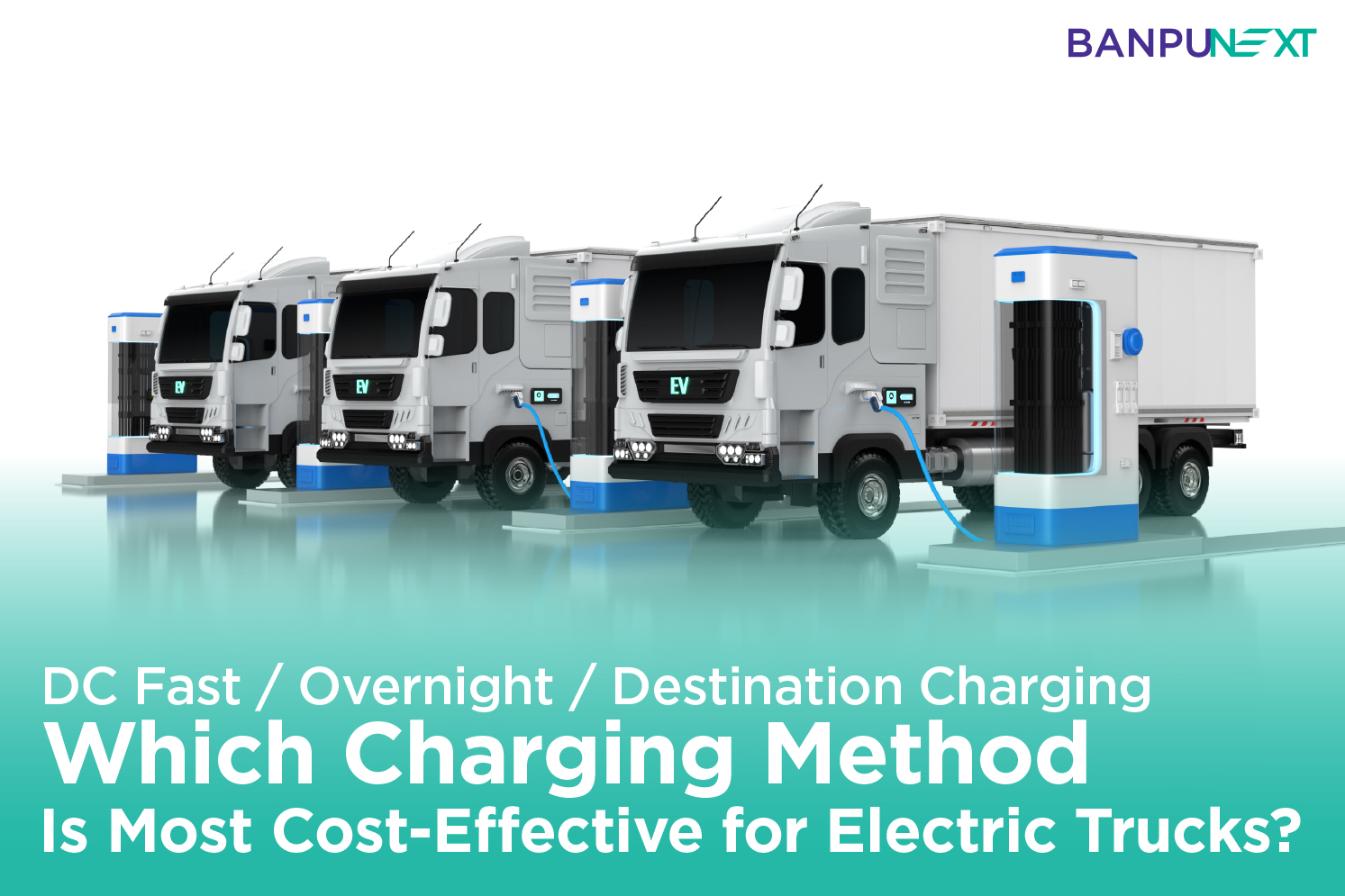
Electric trucks are transforming the logistics industry. Many transport businesses now see the shift to electric trucks (EV trucks) as more than just a way to reduce fuel costs or enhance ESG performance; it is a strategic move to gain a competitive advantage. Charging systems and charging stations now play a crucial role in ensuring a business’s fleet operates efficiently and reliably.
Charging Approaches for Electric Trucks
Choosing the right charging system for electric trucks is an essential factor, as it directly affects operational efficiency and overall business costs. Currently, there are three primary charging approaches that logistics businesses should understand.
DC Fast Charging
DC Fast Charging, or direct-current rapid charging, is a system that requires only a short amount of time, typically around 30–90 minutes, depending on the size and type of battery.
Best suited for:
- Medium- to long-distance routes requiring quick energy replenishment
- Vehicles that must remain in constant operation with minimum downtime
- Routes with available DC Charging Stations along the way
Recommendation:
Use DC Fast Charging only when necessary, as frequent rapid charging can accelerate battery degradation and shorten long-term battery lifespan.
Overnight Charging
Overnight Charging refers to slow or semi-fast charging performed at depots, logistics centers, or warehouses, typically taking around 6–8 hours while the vehicle is parked overnight.
Advantages:
- More cost-effective than Fast Charging due to generally lower nighttime electricity rates
- Ideal for fixed routes with consistent operating schedules
- Reduces battery wear since it uses lower charging currents
- Allows the battery to be fully charged during overnight parking
Best suited for:
Businesses with distribution centers or dedicated parking areas, where charging schedules can be planned in advance.
Destination Charging
Destination Charging refers to charging during scheduled stops—such as at rest areas, distribution centers, or charging stations located along the route.
Advantages:
- Increases flexibility and confidence for long-distance operations
- Makes efficient use of mandatory downtime, such as during loading or unloading
Best suited for:
Businesses with routes that require multiple stops and have built-in rest periods during operations.
Essential Factors that Businesses Must Consider When Choosing EV Truck Charging Methods
Designing a charging system for an electric truck fleet goes beyond simply installing charging points. Several factors must be considered to ensure maximum efficiency and cost-effectiveness.
Fleet Size and Usage Patterns
Determining the right number of chargers and appropriate charging times requires an understanding of:
- The number of vehicles in the fleet and each vehicle’s operating schedule
- Average daily distance and driving frequency
- Starting points and destinations along the route
- Whether mid-route charging is necessary
Electricity Costs and Demand Charges
For businesses, electricity charges are not based solely on consumption units. It also includes a Demand Charge calculated from the highest electricity load within a given period. Using Smart Charging can help by:
- Distributing charging schedules to avoid simultaneous high loads
- Reducing potentially high Demand Charges
- Planning charging during off-peak hours when electricity rates are lower
Battery Maintenance and Lifespan
The battery is the most expensive component of an electric truck, and proper care can significantly extend its lifespan.
- Adopt a 20–80% charging policy – Keeping the battery within this range preserves longevity better than frequently charging to 100%.
- Avoid excessive Fast Charging – Fast charging generates heat and stress on battery cells; it should be alternated with slow charging.
- Monitor battery health – Use monitoring systems to track battery status and performance regularly.
Banpu NEXT: EV Fleet Stations for Modern Logistics Businesses
Banpu NEXT offers EV Fleet Solutions, covering from Commercial EV leasing and rental services, EV Fleet Station with a charging network 9 stations across major routes nationwide. Samut Prakan, Pathum Thani, Khon Kaen, Udon Thani, Samut Sakhon, Nakhon Sawan, Saraburi, Nakhon Ratchasima, and Chonburi, supporting the charging needs of large electric trucks.
Each station is equipped with dual fast-charging units, spacious parking areas, advance booking systems, and an intelligent EV Fleet Management platform. These features are designed to fully support the operational needs of modern transport and logistics businesses.
Get Your Electric Truck Fleet Ready for the Future
Choosing the right charging system is essential to the successful operation of electric trucks. Whether it’s DC Fast Charging for long-distance routes, Overnight Charging for cost efficiency, or Destination Charging for added flexibility, each method offers distinct advantages and must be matched to your business’s operating needs.
Banpu NEXT is ready to be your trusted partner, designing and planning EV Fleet Solutions that deliver efficiency, sustainability, and cost-effectiveness, with an expertise in e-Mobility services.
Start Your EV Fleet Journey Today!
Learn more about the EV Drivers App:
Or contact us for a consultation: