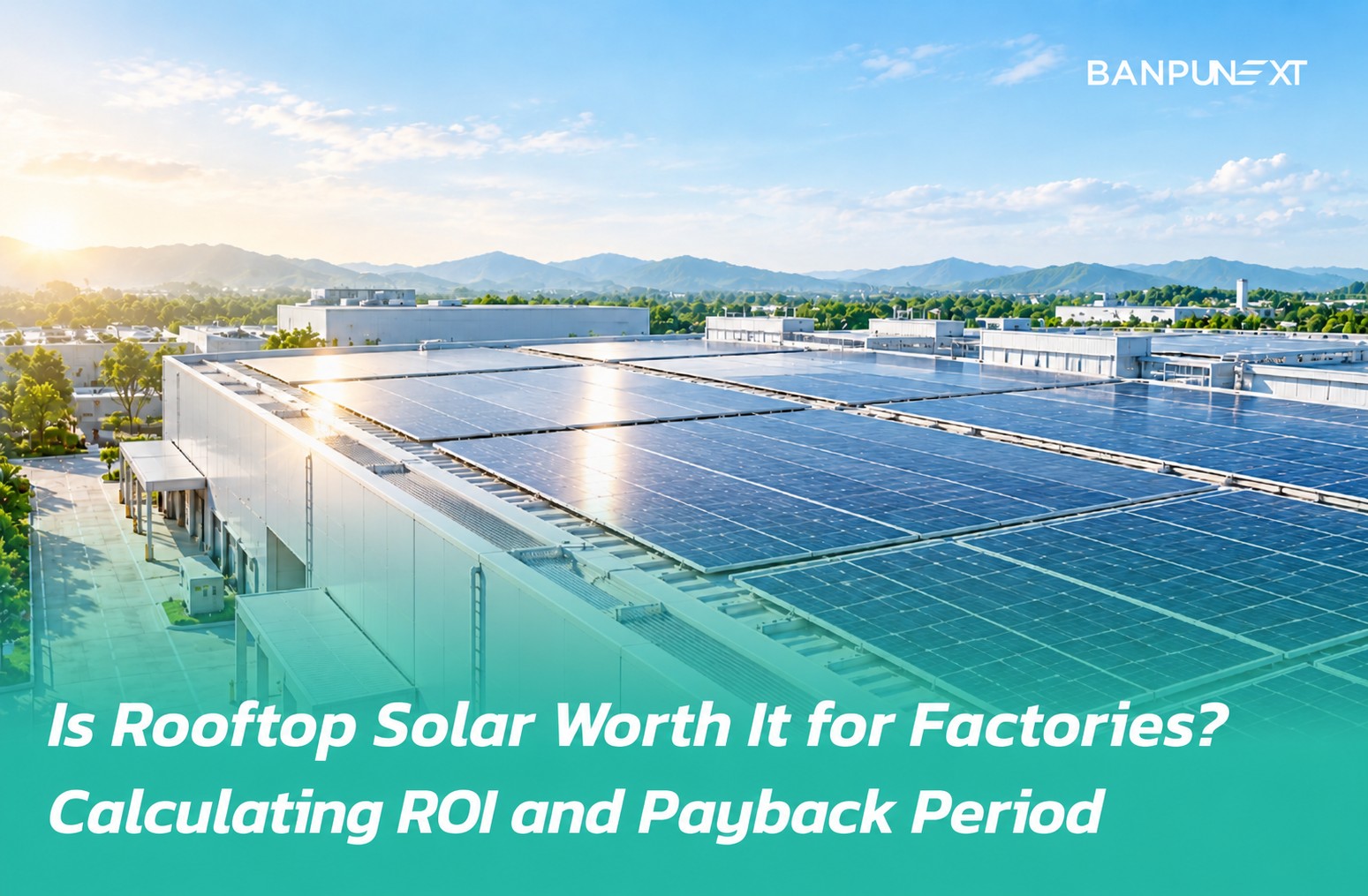
Factory rooftop solar is a strategic investment that can help industrial sectors reduce electricity costs. The typical payback period is around 3–5 years, depending on capacity and the facility’s electricity consumption profile.
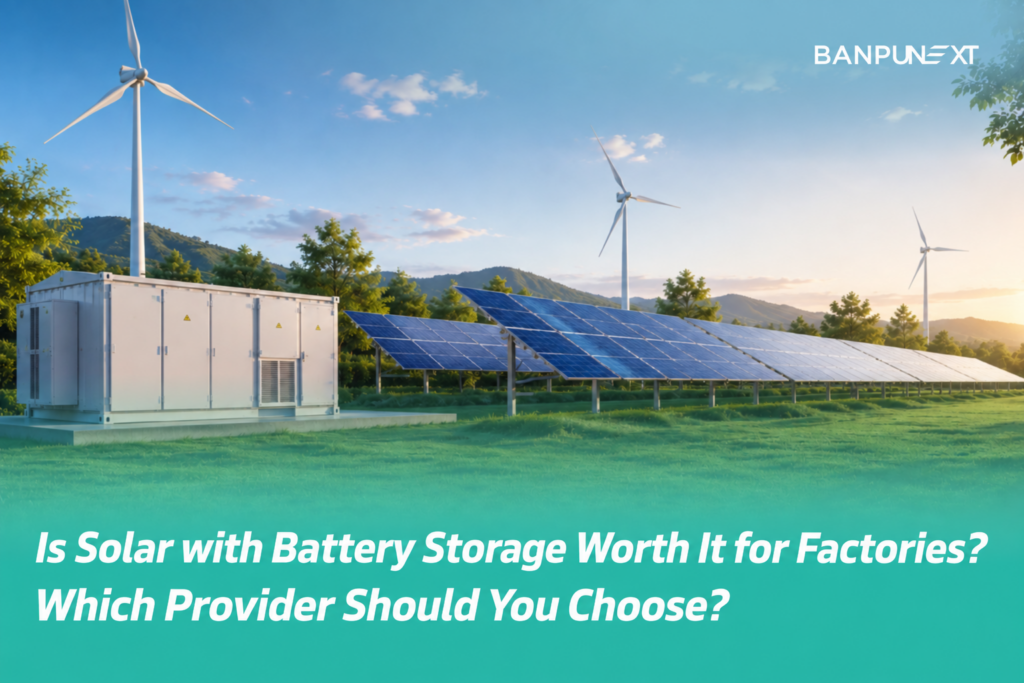
When combined with a Battery Energy Storage System (BESS), rooftop solar can also support peak shaving, reducing maximum demand during peak hours to further lower electricity costs. For this reason, installing a factory solar system with battery storage can deliver strong long-term value and support more efficient energy management.
One of the key challenges facing industries today is the continued rise in electricity costs, which can directly affect profitability and competitiveness. This article explores whether investing in rooftop solar is truly worthwhile, covering the break-even point and payback period calculation, how Battery Energy Storage Systems (BESS) can improve investment returns, and how peak shaving can help reduce electricity expenses.
It also introduces Banpu NEXT, a professional provider of Net Zero Solutions and industrial solar systems, as a long-term energy partner that can help businesses lower energy costs, improve operational efficiency, and support sustainable growth.
Why Rooftop Solar Is a Strategic Investment for Industrial Facilities
Most industrial facilities consume a significant amount of electricity during the daytime, which is also when solar panels generate the most power. By using solar energy directly on-site, factories can reduce their reliance on grid electricity and lower their monthly electricity costs, one of their largest recurring operating expenses.
Beyond reducing electricity costs, rooftop solar can also help industrial facilities lower carbon emissions and accelerate progress toward their Net Zero goals. This can strengthen corporate credibility and help businesses meet the sustainability expectations of international partners and customers.
In addition, government incentives and BOI investment promotion measures are available for solar installations with battery energy storage systems (BESS). These incentives can help shorten the payback period, improve overall investment returns, and enhance energy security for industrial operations.
Installing rooftop solar for industrial facilities is a strategic investment that helps businesses manage energy costs more efficiently, strengthen long-term competitiveness, and reduce exposure to future energy price volatility.
Key Factors in Calculating Break-Even Point and Payback for Industrial Solar
The typical payback period for an industrial solar system is around 3–5 years, depending on system size and electricity consumption patterns. Key factors businesses should consider when planning their investment include:
- Solar System Installation Costs
Factor in equipment, warranties, and long-term maintenance—including solar panels, inverters, mounting structures, installation, monitoring systems, equipment replacement, and ongoing service costs—to understand the true lifetime cost of the project.
- Electricity Consumption Profile
Daytime electricity use and the right system capacity (kWp), aligning with energy demand are key to maximizing savings. Facilities with high, consistent daytime demand can use more solar power directly on-site, reduce reliance on the grid, and potentially achieve a faster payback.
- Electricity Tariff Structure
Savings also depend on the applicable tariff, including Time-of-Use (TOU) rates and the Ft charge. The more solar power offsets grid electricity during On-Peak periods, the greater the potential cost savings.
- Choosing the Right Solar System: On-Grid or Hybrid
On-Grid systems are well suited to factories with high daytime electricity demand and a primary goal of reducing energy costs. Hybrid systems, combined with battery storage, offer greater flexibility by storing excess energy for use at night or when solar generation is insufficient. They can also support peak shaving to reduce demand charges, although the added battery system increases upfront investment costs.
- Tax Incentives and Investment Support
Solar systems installed with battery storage may qualify for tax incentives that help reduce the project’s net investment cost. Businesses should review the latest BOI criteria and related incentive programs, including eligible business types, investment categories, and application requirements.
- Choosing the Right Investment Model
Businesses can choose between self-investment, or a provider-funded model, which helps reduce the need for a large upfront capital investment.
The payback period for industrial solar depends on more than installation cost alone. Electricity usage, tariff structure, system type, available incentives, and the joint investment model. Analyzing actual energy consumption before system design is therefore essential to maximizing returns and managing long-term energy costs.
Maximize Electricity Cost Savings with BESS and Peak Shaving
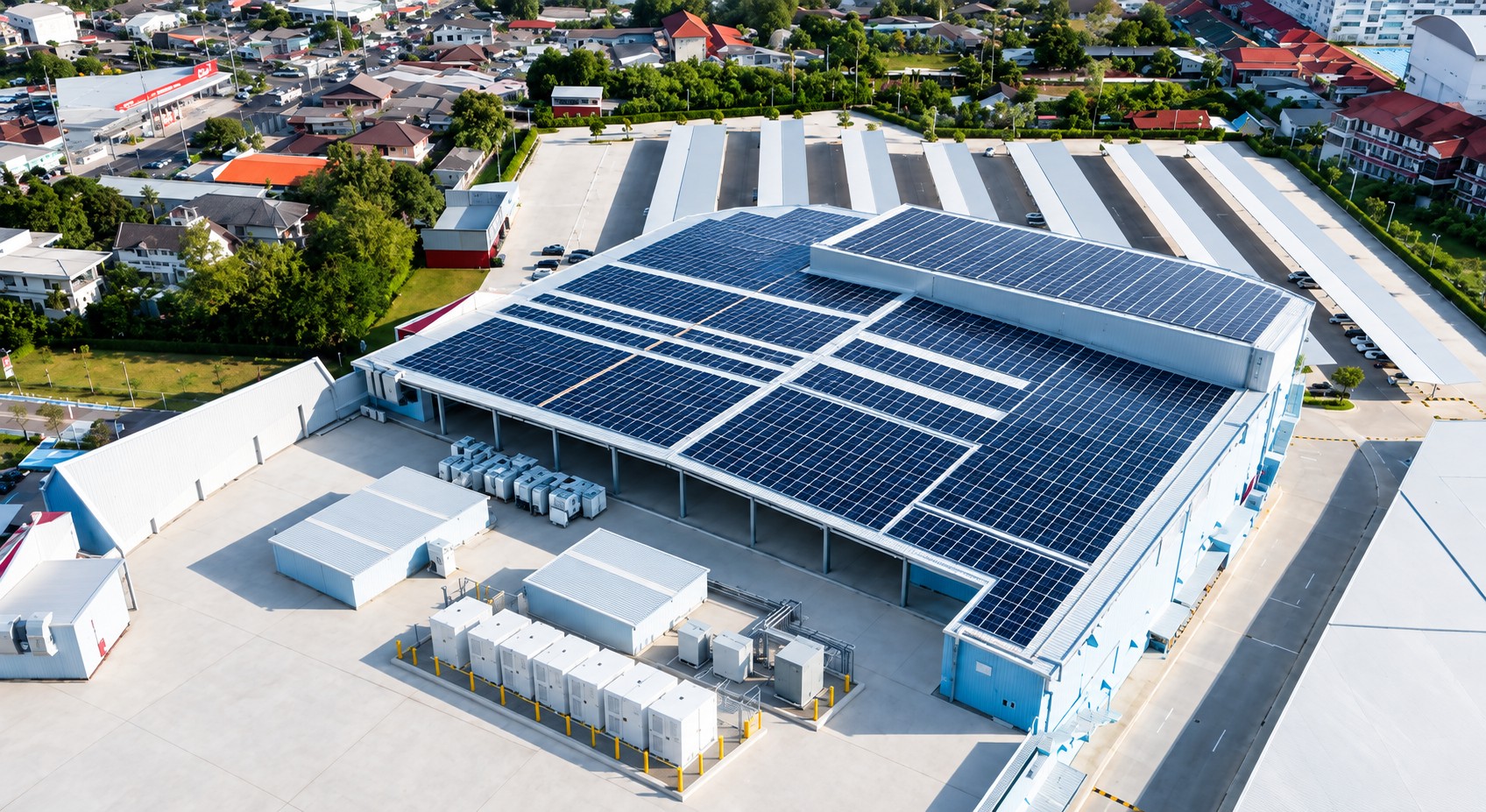
For businesses operating 24/7, rooftop solar installation alone may not be enough. Solar power is generated mainly during the day and drops when sunlight is limited, while factories continue consuming electricity at night. Installing a Battery Energy Storage System (BESS) enables businesses to utilize stored energy when it delivers the greatest value, giving them more flexibility and control over their energy use.
- Store excess solar energy for use when generation is low or unavailable.
- Discharge battery power during peak load periods to reduce maximum demand charges through peak shaving.
- Reduce reliance on grid electricity during high-cost On-Peak periods.
- Improve energy flexibility and operational continuity.
- Support future expansion of clean energy systems.
BESS is well suited to businesses with high, round-the-clock electricity demand or operations where power instability can cause significant losses, such as data centers, factories with continuous production lines, cold storage facilities, and temperature-controlled warehouses.
However, if BESS is intended to provide backup power during outages, the system must be specifically designed with the appropriate control system and power-transfer equipment to support that function.
While BESS can improve the performance and flexibility of rooftop solar, it also increases upfront investment and may extend the payback period. Businesses should therefore assess their electricity consumption profile, peak demand periods, potential savings, system size, battery lifespan, and the financial impact of power instability to determine whether BESS is commercially viable and suited to actual operational needs.
Is Peak Shaving Worth It for Factories, and Who Provides It?
Peak shaving uses energy stored in a Battery Energy Storage System (BESS) to reduce reliance on grid electricity during periods of peak demand. This can significantly lower demand charges, making it particularly valuable for large industrial facilities with high electricity consumption, where demand charges can account for a substantial portion of monthly electricity costs.
To maximize the value of peak shaving, businesses need an expert provider with intelligent energy technology and advanced data analytics to accurately predict peak demand and optimize battery charging and discharging based on actual energy consumption patterns.
Choosing a provider with strong technical expertise and a digital energy management platform can help factories assess project viability more accurately, reduce investment risk, and unlock greater cost savings from their battery energy storage system.
Which Provider Should You Choose for Factory Solar with Battery Storage?
Banpu NEXT provides end-to-end Net Zero Solutions, including rooftop solar and Battery Energy Storage Systems (BESS), supported by a digital platform for real-time energy monitoring. This enables solar and battery systems to work together efficiently and maximize energy performance.
Banpu NEXT also offers other clean energy solutions, including Smart Energy Management, chiller systems, and IoT energy sensors. Together, these solutions help businesses enhance energy efficiency, evaluate potential savings, plan investments more effectively, and track performance systematically.
How Long Does Factory Solar Take to Pay Back, and Which Provider Offers Long-Term Value?
A factory rooftop solar system typically has a payback period of around 3–5 years, depending on system size, investment cost, and electricity consumption patterns. After reaching the break-even point, businesses can continue saving on electricity throughout the solar panels’ typical 25-year lifespan, delivering long-term cost savings and investment returns.
Long-term value depends not only on technology, but also on choosing the right partner that supports the project throughout its lifecycle. Banpu NEXT, a long-term Net Zero partner, provides total Solutions, from consultation, energy consumption analysis to payback and savings assessment, system design and installation, and digital platform for efficient energy management.
This comprehensive approach helps businesses reduce electricity costs and carbon emissions while advancing their long-term sustainability and Net Zero goals.
Contact us – Banpu NEXT
Calculate solar installation – Banpu NEXT
Frequently Asked Questions (FAQ)
Q1: How Long Does Factory Solar Take to Pay Back, and Which Provider Should You Choose?
- A: Factory rooftop solar typically has a payback period of around 3–5 years, depending on system size and electricity consumption patterns. A provider such as Banpu NEXT can support the entire project lifecycle, with engineering expertise and a digital platform that tracks real-time energy consumption, electricity cost savings, and carbon emissions reduction.
Q2: Which Provider Should You Choose for Factory Solar with Battery Storage?
- A: Choose a provider with expertise in both solar and Battery Energy Storage Systems (BESS). Banpu NEXT provides system design, consultation, and installation tailored to each facility’s actual energy profile, helping businesses maximize the value of their solar and battery investment while improving overall energy efficiency.
Q3: Is Peak Shaving Worth It for Factories, and Who Provides It?
- A: Peak shaving can be highly effective for factories with high electricity demand during peak hours (peak demand), as it helps significantly reduce demand charges. Banpu NEXT provides this solution by integrating solar, battery storage, and smart energy management to efficiently minimize peak-hour consumption.