When businesses require a continuous and reliable power supply, they must also manage the risks of voltage drops, power outages, and grid instability, while coping with rising electricity costs. This is especially important for factories and businesses with high electricity consumption during Peak periods or those operating 24/7.
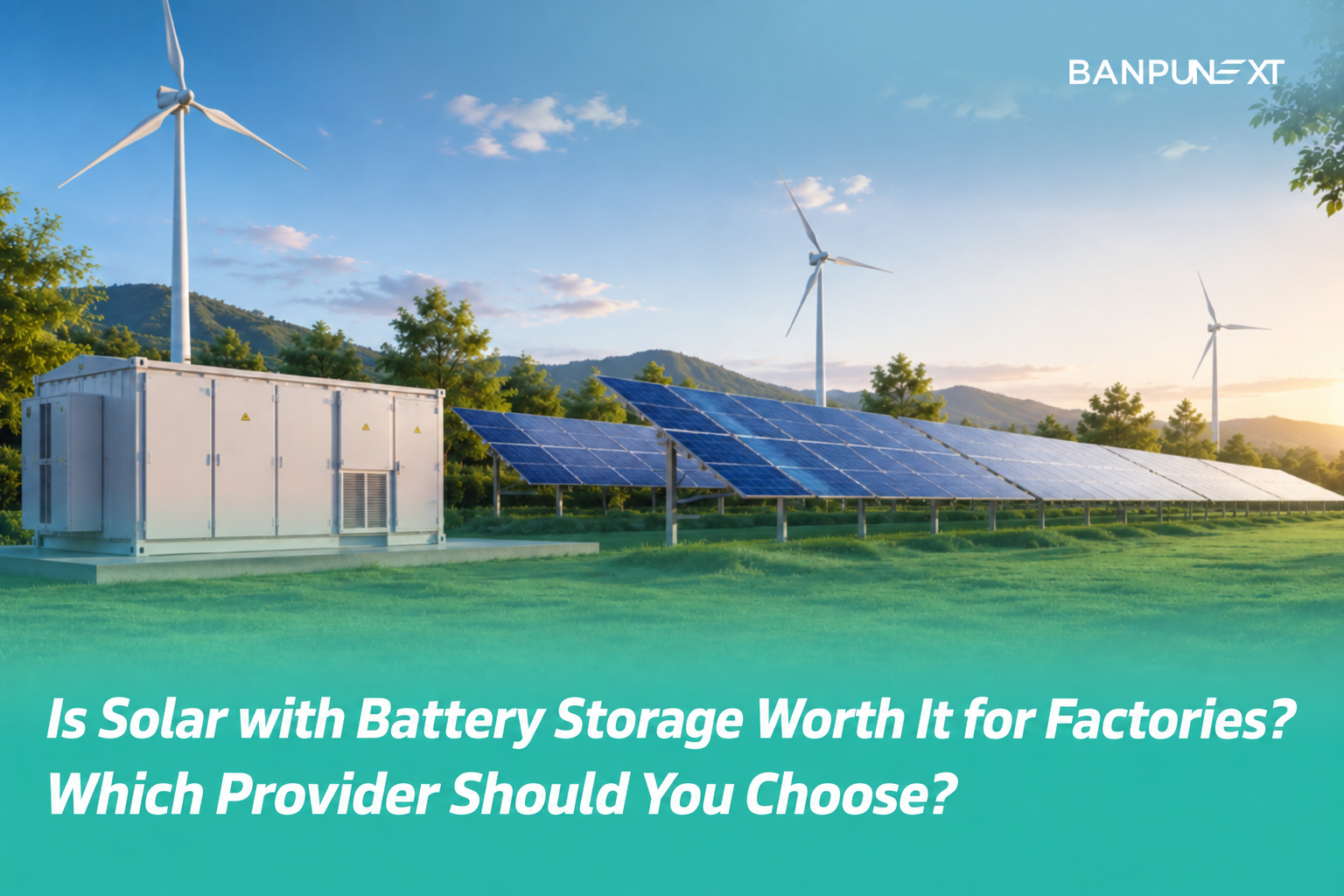
Installing solar power with battery storage can therefore be a highly effective way to improve energy management. Any excess electricity generated by the solar system during the day can be stored in batteries for use at night or during power outages. The system can also help manage Peak Demand and reduce reliance on electricity from the main grid.
One of the most common questions businesses ask is whether investing in solar power with battery storage is truly worthwhile and which provider they should choose. The answer depends on several factors, including the business’s electricity consumption profile, electricity costs, Peak usage periods, available installation space, and backup power requirements.
Banpu NEXT can help businesses better understand Energy Storage Systems (BESS), the benefits of combining solar power with energy storage systems for businesses and factories, and how Peak Shaving can help reduce electricity costs. This article also explores whether solar and battery storage are cost-effective for factories, provides a checklist for evaluating payback periods, and explains what to consider when choosing the right provider—helping businesses invest wisely and strengthen long-term energy security.
Why Is Solar with Battery Storage Becoming the Energy Trend of The New Era?
Energy price volatility and the need for a stable, round-the-clock power supply mean that solar alone is no longer enough. The limitation of on-grid solar systems, which have no battery storage, is that they can only generate and supply power during daylight hours.
Energy price volatility and the demand for a reliable, 24/7 power supply have made solar systems alone insufficient for many businesses. The limitation of on-grid solar systems without battery storage is that they can generate and supply electricity only when sunlight is available during the day.
Energy price volatility and the demand for a reliable, 24/7 power supply have made solar systems alone insufficient for many businesses. The limitation of on-grid solar systems without battery storage is that they can generate and supply electricity only when sunlight is available during the day. Any excess solar energy produced may also go unused if it cannot be stored for later use.
In addition, when a power outage or voltage drop occurs on the main grid, the inverter will automatically shut down for safety reasons. This can cause machinery and production lines to stop unexpectedly, potentially leading to operational disruption and financial losses.
Installing solar power with battery storage helps transform the way businesses manage energy by enabling them to make greater use of electricity generated on-site, reduce the risks associated with voltage fluctuations and power outages, and maximize the value of clean energy over the long term.
How Does an ESS (Energy Storage System) Work?
During the day, electricity generated by the solar system is used to power the facility first, while any excess energy is stored in the battery (Charge). When there is few sunlight or at night, during high electricity tariff periods (On-Peak), or in the event of a power outage, the battery releases the stored energy (Discharge) to supply electricity to machinery and other critical systems in place of power from the main grid. This helps buildings and factories maintain a more continuous power supply throughout the day.
By combining solar power with an ESS, businesses can overcome the time-related limitations of solar generation and turn solar energy into a more stable, manageable power source that can support operations around the clock. This enables businesses to plan electricity usage more efficiently, reduce reliance on the main grid, and strengthen long-term energy security.
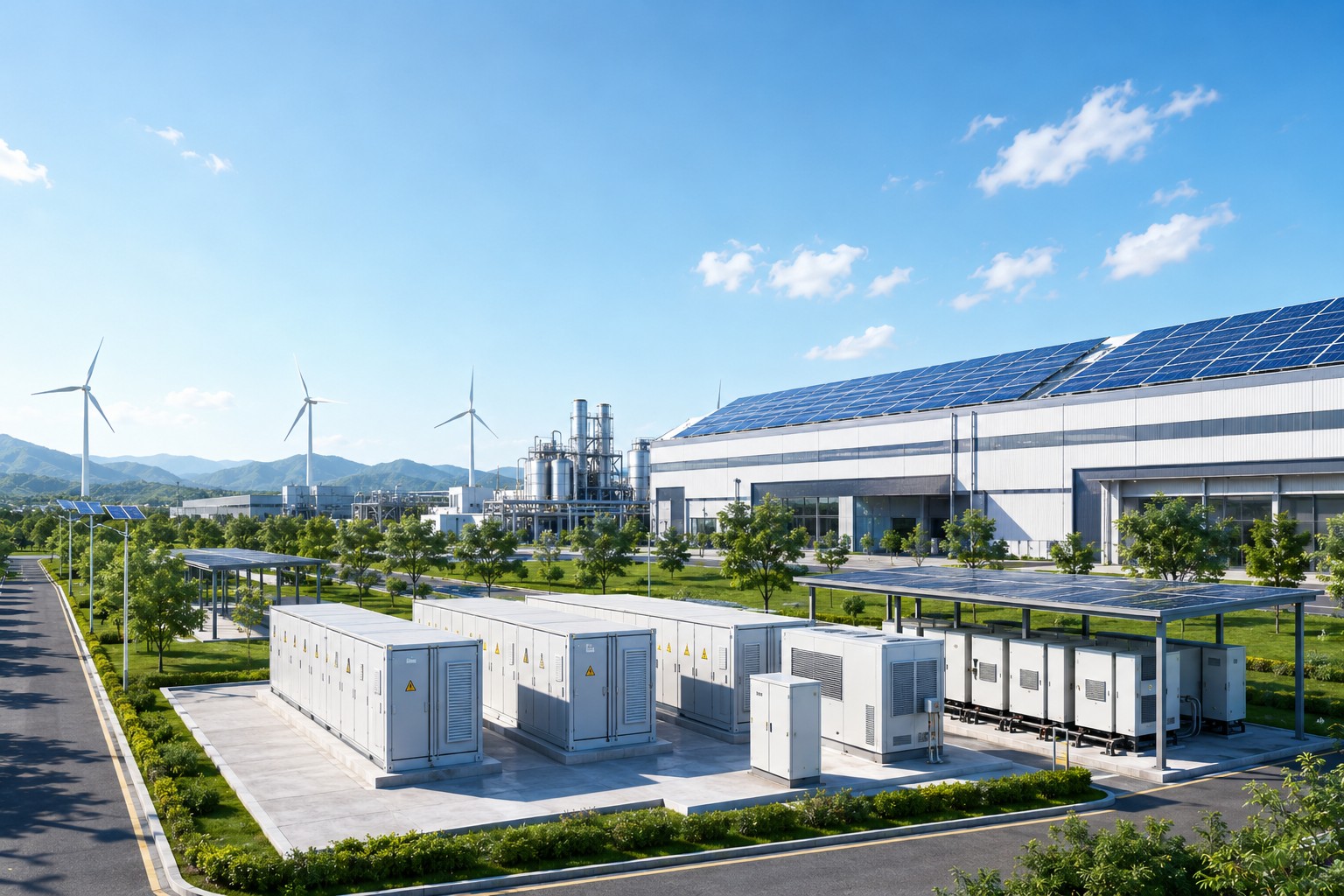
Is Solar with Battery Storage Worth the Investment for Factories and Businesses?
Combining solar power with a Battery Energy Storage System (BESS) enables industrial sector to transition from being solely energy consumers to becoming more self-reliant energy producers and managers. When the system is properly designed to match the business’s actual energy consumption profile, it can help reduce electricity costs, optimize energy use, and deliver greater long-term value from investment.
What Are the Benefits of Solar with Battery Storage?
Energy Security
- Backup power during outages: When the grid goes down, the system can draw electricity from the battery to keep operations running. This is particularly important for production lines, cold storage facilities, and servers that require a reliable 24-hour power supply.
- Reduce reliance on grid electricity: Excess solar energy generated during the day can be stored in the battery and used at night, helping businesses rely less on electricity from the grid.
Cost and Financial Benefits
- Reduce long-term electricity costs: Businesses can generate their own electricity from solar power, while the battery stores excess energy for use during Peak periods, at night, or whenever solar generation is insufficient.
- Reduce Peak Demand Charges: Stored battery power can be used during periods of high electricity demand, helping lower Peak Demand Charges through Peak Shaving.
- Achieve payback over the medium term: Solar with battery storage generally has a longer payback period than a standalone solar system, averaging approximately 5–10 years, depending on system size, electricity consumption patterns, and applicable tax incentives. Available tax benefits may also help shorten the payback period.
Sustainability Benefits
- Reduce carbon emissions by utilizing clean energy solutions.
- Support ESG and Net Zero goals, which are becoming increasingly important to customers and business partners in both Thailand and international markets.
- Create greater business opportunities by helping businesses meet environmental requirements from international trading partners, including requirements related to CBAM.
Investment Incentives
BOI Incentives: Businesses may be eligible for a corporate income tax exemption for three years, up to 50% of the total investment. Check the latest conditions at BOI / tax deduction benefits may be subject to change in accordance with government policies.
What Should Businesses Consider Before Investing in Solar and Battery Storage?
- System size and electricity consumption patterns: Businesses should accurately analyze how much electricity is used during the day versus at night, then design a system that matches actual energy demand.
- Battery lifespan: Batteries typically have an average lifespan of around 10–15 years, which is shorter than that of solar panels. Businesses should therefore plan for maintenance costs and future battery replacement.
- Clearly assess the payback period and ROI: Battery storage delivers the greatest value when a business has high Demand Charges, uses Time-of-Use (TOU) electricity tariffs, frequently cycles the battery, or requires energy storage and backup power—for example, in areas with unstable electricity supply, frequent voltage drops, or power outages. Before investing, businesses should have an expert analyze actual electricity consumption data to determine the appropriate system size and expected usage for their specific operations.
- Choose an expert and experienced provider with end-to-end services: The provider should offer comprehensive services covering consultation, site surveys, electricity consumption assessment, system design, installation, and after-sales support, along with equipment warranties and system maintenance throughout the contract period.
- Use Monitoring System: The system should provide real-time monitoring for energy generation, consumption, and electricity cost savings, allowing businesses to monitor system performance and evaluate results immediately.
- Select an investment model that fits the business’s cash flow: Options may include EPC or outright purchase, where the business invests in and owns the system, or a PPA (Power Purchase Agreement) model, where the service provider makes the investment.
Businesses and factories should carefully evaluate these key factors before investing in solar and battery storage to maximize energy efficiency, achieve the greatest possible value from the system, and support long-term business growth.
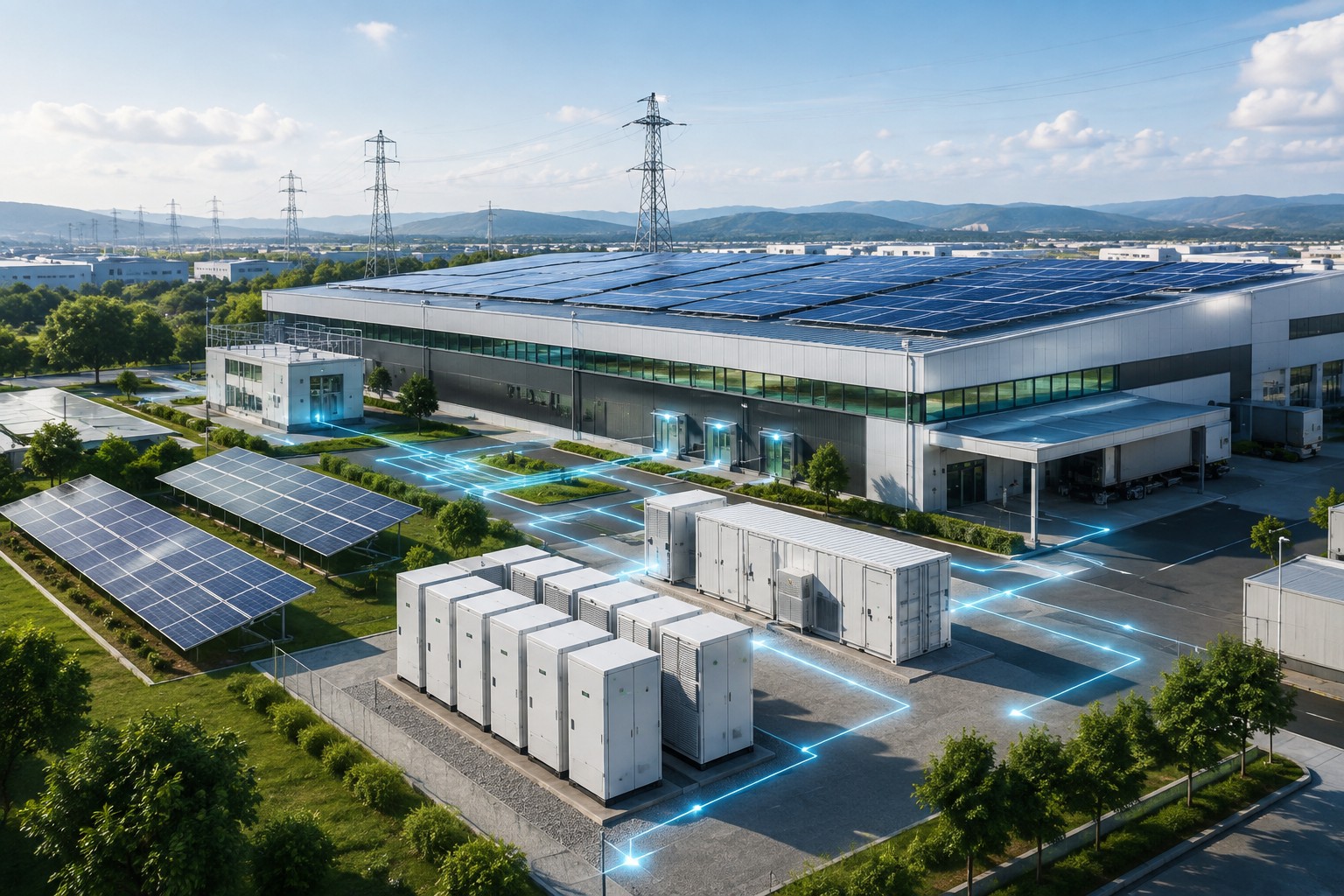
Which Businesses Are Best Suited for Solar with Battery Storage?
In addition to reducing electricity costs, combining solar power with an energy storage system for businesses can strengthen energy security and improve the overall value and return on investment for businesses with specific electricity consumption patterns and operational requirements. This solution is particularly suitable for:
- Industrial facilities and factories that require a highly stable power supply and operate 24 hours a day, especially those with cold storage, freezer facilities, or continuous production lines.
- Data centers and businesses with mission-critical server systems that require large amounts of reliable electricity around the clock.
- Shopping malls, large commercial buildings, and mixed-use complex with high electricity consumption and significant Demand Charges. An ESS can help reduce electricity costs during peak periods through Peak Shaving while improving overall energy efficiency.
- Businesses located in areas with unstable grid supply or limited access to the power grid, such as remote resorts or facilities in locations where electricity supply is unreliable.
- Businesses preparing for environmental regulations and requirements, such as Carbon Tax and CBAM, as well as organizations with Net Zero goals that aim to reduce carbon emissions by increasing their use of clean energy.
For businesses with high electricity costs and Demand Charges, continuous 24-hour operations, or significant operational risks associated with power outages, installing solar with battery storage can offer greater value than a standalone solar system. Businesses should begin by analyzing their electricity consumption patterns and operational requirements so that the system can be properly designed to deliver the best possible performance and return on investment.
5 Key Criteria for Choosing a Solar and Battery Storage Provider
Choosing a provider should not be based on price alone. Businesses should consider the overall service model—whether the provider offers end-to-end solutions or only specific services—as well as equipment quality, technology, safety standards, system design capabilities, after-sales support, and maintenance services. Evaluating these factors carefully can help businesses make the right investment decision and achieve long-term value.
- Battery Technology Standards and Safety Choose high-quality batteries that meet recognized safety standards and are equipped with a Battery Management System (BMS) that complies with international standards.
- End-to-End Service The provider should offer professional support and consultation throughout every stage of the project, from site surveys and electricity consumption analysis to system design and installation, as well as assistance with relevant documentation and permit applications.
- Smart Energy Monitoring and Management Technology The solution should include a system or platform that provides real-time monitoring for energy generation, consumption, and power distribution, while also tracking energy savings and carbon emission reductions.
- After-Sales Service and Operation & Maintenance (O&M) An expert engineering team should be available to provide technical advice, system inspections, maintenance, and prompt troubleshooting. The provider should also offer clear warranty terms and ongoing system support throughout the contract period.
- Company Stability, Experience, and Track Record Review the provider’s experience, completed projects, and expertise in energy technologies to ensure that the company has the capability and stability to support the project throughout the system’s entire service life.
Choosing a solar and battery storage provider with proven safety technology, the ability to design a system around actual business requirements, comprehensive project support, real-time monitoring, and reliable after-sales service can make a significant difference. In particular, working with an experienced end-to-end solutions provider can give businesses greater confidence in their investment and help ensure that the system delivers long-term value.
Why Choose Banpu NEXT for Solar and Battery Storage Installation?
For businesses looking for a provider that delivers quality, safety, and long-term value, Banpu NEXT, a comprehensive Net Zero Solutions provider, offers clean energy solutions and solar installation services for factories and businesses, integrated with Battery Energy Storage Systems (ESS). These solutions help improve energy efficiency, reduce electricity costs, and lower carbon emissions, while supporting businesses in achieving their sustainability and Net Zero goals.
What Makes Banpu NEXT Services Stand Out?
- Tailor-made solutions for each business: Banpu NEXT analyzes electricity consumption patterns and designs solar and battery storage systems specifically around the operational requirements of each organization.
- Real-time monitoring via application and Digital Platform: Businesses can monitor energy generation, consumption, electricity cost savings, and carbon emission reductions in real time, allowing them to immediately see the performance and benefits of their solar and battery storage systems.
- Comprehensive, one-stop service: From consultation and system design to solar and battery installation and after-sales service, every stage is supported by a team of experienced specialists.
- Supports both business value and environmental goals: The solutions help businesses reduce energy costs while lowering carbon emissions, supporting their transition toward Net Zero.
- Makes clean energy more accessible for businesses: Banpu NEXT offers three flexible investment models for solar and battery storage, designed to meet different business requirements. These options help businesses achieve their strategic goals, create long-term value, and manage cash flow more effectively.
Comparison of Banpu NEXT’s Solar & ESS Investment Models
| Signature Package
0 THB Investment Cost |
Smart Package
Access Clean Energy with a Cost-Effective Investment |
Subscription Package
Manage Costs with a Fixed Monthly Service Fee |
|
| Key Benefits | • Banpu NEXT fully invests in the system
• Start saving immediately through electricity bill discounts from solar energy • Guaranteed savings throughout the contract period • Free operation and maintenance services throughout the contract period • The customer owns the system upon completion of the 10–20-year contract
|
• Solar investment: less than THB 25/watt
• Battery investment: starting from THB 10,000/kWh • The customer owns the system immediately after installation is completed and full payment • Eligible for BOI tax incentives* • Maximize long-term electricity cost savings • Solar panel warranty: 10–12 years / Inverter 10 years / Battery 5 years (extendable up to 20 years) • Free operation and maintenance services for the first 5 years |
• Pay a fixed monthly service fee throughout the contract period
• The customer owns the system upon completion of the contract • Eligible for BOI tax incentives* • Equipment warranty throughout the contract period (5–10 years) • Free operation and maintenance services throughout the contract period (5–10 years)
|
| Suitable for | Businesses looking to reduce electricity costs immediately without a large upfront investment, while maintaining maximum financial liquidity | Businesses seeking maximum long-term value and tax benefits | Businesses looking to control costs through fixed installment payments while also receiving tax benefits |
*Tax incentive terms and conditions are subject to change in accordance with government policies.
How Should Businesses Plan Solar and Battery Storage Installation for Maximum Value?
The key is to begin with an accurate analysis of the organization’s electricity consumption patterns. This helps determine the right energy solution, system size, and battery technology to effectively support both peak shaving and reliable backup power, while choosing the investment model that best fits the business.
Another important factor is choosing an expert energy technology provider that offers end-to-end services and solutions tailored to different business needs. The right partner can help turn clean energy investment into a long-term business strategy—reducing operating costs, and creating new opportunities for sustainable growth.
Contact us – Banpu NEXT
Calculate solar installation – Banpu NEXT
Frequently Asked Questions (FAQ)
Q1: What is the payback period for installing solar with battery storage?
In general, a standalone solar power system has an average payback period of approximately 3–5 years. For a solar system integrated with a Battery Energy Storage System (ESS), the payback period is typically longer due to the additional cost of the battery, averaging around 5–10 years. The actual payback period depends on many factors such as system size, energy consumption patterns, and available tax incentives, which may help shorten the return on investment period.
However, solar panels typically have a service life of around 25 years, while batteries generally last approximately 10–15 years. This means businesses can continue benefiting from electricity cost savings even after the initial investment has been recovered.
Q2: If a solar power system is already installed, can an energy storage system (ESS) be added later?
Yes. There are two main approaches:
- Replace the existing inverter with a Hybrid Inverter that supports direct battery integration. This option is suitable when the existing inverter is nearing the end of its service life or when the business wants to maximize overall system efficiency.
- Add an AC-Coupled Storage System by installing a separate battery and inverter alongside the existing solar system without replacing the current inverter. This approach is ideal when the goal is to minimize changes or disruption to the existing system.
In either case, an expert engineer should assess the existing system configuration, electrical infrastructure, and system size before installation to determine which approach is most suitable for the business.
Q3: How long does an energy storage system (ESS) used with solar typically last, and when should it be replaced?
The battery technology commonly used in commercial and industrial energy storage systems is Lithium Iron Phosphate (LFP). These batteries typically have an average service life of around 10–15 years, or approximately 4,000–6,000 charging cycles or more, depending on the warranty terms, usage patterns, and maintenance.
Battery storage capacity will naturally decline over time. In general, replacement should be considered when the battery’s usable capacity falls below approximately 70% of its original capacity, as this may begin to significantly affect the amount of energy the system can store and deliver.
Q4: Will a solar and battery storage system switch on immediately during a power outage?
Yes, provided that the system supports backup power functionality such as UPS/EPS. In this case, when a power outage occurs, the system automatically switches to battery power within milliseconds, allowing machinery, server systems, and other critical equipment to continue operating with minimal or no interruption. This helps protect business operations and reduce the risk of damage caused by voltage drops or power outages.
Q5: What investment models are available for businesses or factories looking to install solar with battery storage?
Banpu NEXT offers three flexible investment models designed to suit different business needs:
- Smart Package or EPC (outright purchase)
The business makes the upfront investment and owns the system immediately once installation is completed and full payment. The business may also be eligible for BOI tax incentives. Once the payback period ends, business can enjoy “free self-generated electricity”, cutting electricity costs by 100%. - Signature Package or Solar PPA 0 THB investment costs
Banpu NEXT fully invest. This model is ideal for business that prefer not to commit a large amount of capital upfront. Customer can start saving immediately through electricity bill discounts from solar energy, receives free operation and maintenance services throughout the contract period, and owns the system upon completion of the 10–20-year contract.
- Subscription Package
The business pays a fixed monthly service fee throughout the contract period and owns the system upon completion of the contract. Customers may also be eligible for BOI tax incentives, allowing business to maintain predictable costs while benefiting from available tax advantages at the same time.