Fluctuating fuel prices remain one of the biggest risks for transportation and logistics businesses. As fleet numbers grow, energy expenses become a major operational cost that is increasingly difficult to control.
Today, many organizations are transitioning to electric commercial vehicles or electric vehicles fleets (EV Fleets) including vans, trucks, 6–10 wheel trucks, truck tractors, and other commercial transport vehicles together with Fleet Charging Solutions. This helps businesses reduce energy costs, lower maintenance expenses, and manage operating costs more efficiently, especially for transportation and distribution businesses with vehicles operating on a daily basis.
According to the International Energy Agency (IEA) and BloombergNEF, the energy cost per kilometer of electric trucks can be more than 50% lower compared to diesel trucks when charging is managed properly. This allows businesses to turn fluctuating energy costs into costs that are easier to forecast and control.
Therefore, using an EV Fleet alone may not be enough. With the right Fleet Charging system, transportation businesses can reduce energy costs, improve fleet operation efficiency, and manage expenses more effectively.
How Can an EV Fleet Reduce Costs for Transportation Businesses?
Transitioning fleet vehicles from conventional fuel-powered vehicles to electric vehicles fleets (EV Fleets) is one approach that helps businesses manage transportation costs more effectively, including energy expenses, maintenance costs, and long-term fleet operations. Key advantages of EV Fleets include:
- Lower Energy Costs and Easier Cost Planning
Electric vehicles generally have lower energy costs per kilometer compared to fuel-powered vehicles, allowing businesses to manage and forecast energy expenses more effectively. The level of savings depends on driving distance, operational patterns, and charging management strategies for each business.
- Reduced Long-Term Maintenance Costs
Electric vehicles have fewer components in their powertrain systems compared to internal combustion engine vehicles. As a result, they require less maintenance for certain systems such as engine oil changes and exhaust systems, helping reduce maintenance costs and minimize vehicle downtime caused by engine-related issues.
- More Efficient Fleet Management
With fewer risks of engine-related failures, businesses can manage vehicle schedules and fleet operations more efficiently and consistently, especially for fleets operating daily. This helps reduce disruptions to transportation and delivery operations.
- Support ESG and Net Zero Goals While Reducing Supply Chain Carbon Emissions
Many organizations and global business partners are placing greater emphasis on reducing carbon emissions across supply chains. Adopting EV Fleets can support corporate ESG and Net Zero goals while strengthening a business’s long-term sustainability image.
Where Can Heavy-Duty EVs Be Charged? What If Charging Stations Are Hard to Find?
One of the key challenges of operating heavy-duty electric commercial vehicles is that not every EV charging station is designed to support commercial fleet operations. Most public EV charging stations are built for passenger cars, which means they may not provide sufficient charging capacity, compatible connectors, or enough parking and turning space for 6–10 wheel trucks or tractor-trailers. Therefore, businesses looking to operate EV fleets efficiently should choose charging solutions specifically designed for commercial vehicles.
- Use charging stations specifically designed for commercial vehicles
For businesses operating along major highways or logistics routes, the first step is to develop an effective route planning strategy by identifying charging stations that are purpose-built for heavy-duty EVs. These stations should provide high-power charging capability (DC Fast Charge) and sufficient space for large commercial vehicles. Businesses can then plan charging stops based on battery capacity and operational schedules to ensure continuous transportation without unnecessary delays while maintaining on-time delivery. This approach is particularly suitable for interprovincial transportation or fixed-route operations.
- Install charging systems at your own facilities
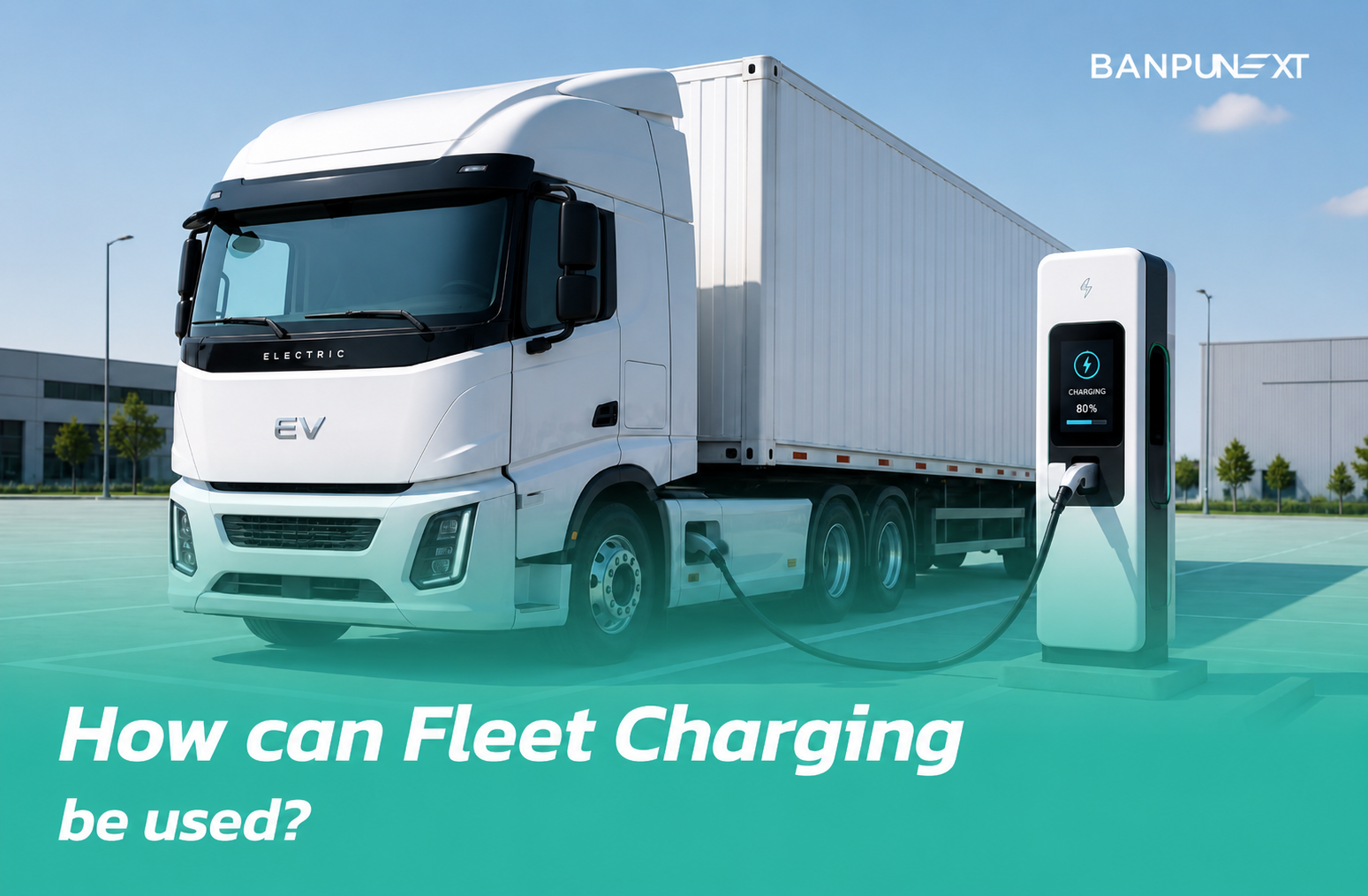
If charging stations are still limited along transportation routes, or if businesses want greater control over operating costs and charging schedules, installing charging systems at distribution centers or fleet parking areas is another key option. This reduces dependency on public charging availability and allows businesses to optimize electricity costs by charging vehicles overnight during off-peak hours. As a result, every vehicle can be fully charged and ready for operation the next morning without relying on public charging stops during the day. This approach helps reduce operational risks related to charging accessibility while making energy costs more predictable and manageable
If businesses are unsure where to begin, one of the easiest approaches is to work with a Fleet Charging Solutions provider that offers end-to-end consultation services from evaluating site electrical capacity and upgrading power infrastructure, selecting the right charger specifications for different vehicle types, to designing charging layouts that support smooth vehicle access and operations. This helps ensure a more structured transition while preventing unnecessary budget overruns.
Banpu NEXT Provides Fleet Charging Solutions for Transportation Businesses
Managing commercial EV fleets is more complex than managing general passenger vehicles. Businesses must consider transportation schedules, driving routes, cost management, and vehicle availability, especially for operations that require continuous daily transportation or long-distance logistics.
One of Banpu NEXT’s comprehensive Net Zero Solutions is Fleet Charging Solutions designed to support all types of commercial EV fleets for transportation and logistics businesses. These charging solutions support all types of commercial EV fleets, covering both urban fleet operations and long-distance transportation. The systems are designed based on real operational requirements, including charging capacity, charging speed, and fleet usage management, helping businesses control energy costs while maintaining transportation efficiency.
Another key strength is Banpu NEXT’s understanding of logistics operators’ pain points, whether it is charging time affecting delivery schedules, charging station layouts that do not support large commercial vehicles, or electrical infrastructure limitations. As a result, Banpu NEXT provides more than just charging stations — it delivers solutions designed to align with real logistics operations through two main service models:
- Route Charging
Charging stations for electric trucks and commercial EVs located along logistics routes, supporting long-distance transportation operations. This helps businesses reduce charging downtime and improve route planning efficiency.
- Fleet On-site: Charging Installation at Customer Premises with Zero Investment
Charging system installation services within business premises for organizations that want to manage EV charging within parking areas or distribution centers. This helps businesses control energy costs, improve operational convenience, and support efficient long-term fleet management without requiring upfront investment.
Route Charging Stations for Logistics Operations
Banpu NEXT provides a charging station network specifically designed to support electric trucks and commercial EV fleets, enabling businesses to charge vehicles continuously along transportation routes. The network supports Bangkok, surrounding metropolitan areas, and key logistics routes across Thailand.
Currently, 9 charging stations are in operation in Samut Prakan, Samut Sakhon, Pathum Thani, Saraburi, Nakhon Ratchasima, Khon Kaen, Udon Thani, Nakhon Sawan, and Chonburi, with plans to expand to 50 stations in the future to support the growing adoption of EV Fleets in the transportation sector.
The stations are purpose-built for fleet operations and equipped with key features such as:
- High-power DC Fast Charging systems designed to support large commercial vehicles
- Supports simultaneous charging for multiple vehicles
- Reservation systems to help reduce waiting time and improve fleet operation continuity
- Fleet management systems for enterprise customers
In addition, Banpu NEXT offers supporting services for businesses, including Fleet Cards, corporate credit systems, and Monitoring Platforms that enable real-time charging data tracking and energy cost management. Charging fees start from THB 5.5 per kWh, helping businesses manage and forecast energy expenses more effectively.
On-site Charging Solutions for Business Premises
In addition to Route Charging stations, Banpu NEXT also provides On-site Charging solutions for businesses with large EV fleets that require charging management within their own premises. The service covers everything from usage analysis and system design tailored to different vehicle types, to high-performance charger installation and ongoing operation and maintenance (O&M) services by expert teams. This helps businesses manage energy usage and control operational costs more efficiently.
Conclusion
Transitioning to EV Fleets together with Fleet Charging systems is not only about adopting clean energy, but also about helping transportation and logistics businesses manage costs more efficiently including energy expenses, maintenance costs, and long-term fleet operations.
Choosing the right charging solution for each business’s transportation model is equally important, whether it is Route Charging for long-distance transportation or On-site Charging to improve charging convenience and better control operational costs within business premises.
Banpu NEXT is ready to support businesses with end-to-end Fleet Charging Solutions, from consultation and system design to charging management platforms. This helps businesses transition to EV Fleets more easily, cost-effectively, and with confidence for future growth.
Contact Us – Banpu NEXT
Frequently Asked Questions
Q1: Can electric trucks or heavy-duty commercial EVs use regular EV charging stations?
- While some standard EV charging stations may technically support certain commercial EVs, they are generally not designed for heavy-duty fleet operations, as charging capacity, parking space, and charging connectors may not fully support larger commercial vehicles. Businesses should therefore choose charging stations specifically designed for EV Fleets to ensure more efficient and continuous operations.
Q2: What should businesses do if there are no charging stations along transportation routes?
- One approach many businesses adopt is installing charging systems within their own parking areas or distribution centers. This allows vehicles to charge overnight during Off-Peak electricity periods and be ready for operation the next day, helping reduce concerns about route charging availability while improving energy cost management.
Q3: How can businesses conveniently manage charging costs for multiple vehicles?
- Banpu NEXT provides EV Fleet management solutions such as Fleet Cards and Monitoring Platforms that help summarize charging expenses, review historical charging data, and monitor vehicle usage in a centralized system. This helps reduce administrative processes and makes cost management more efficient.
Q4: How should businesses get started with EV Fleets if they are still unsure about charging systems?
- Businesses can begin by assessing vehicle usage patterns, driving distances, and the readiness of their electrical infrastructure to determine the most suitable charging approach, whether Route Charging or On-site Charging.
Banpu NEXT provides end-to-end Fleet Charging Solutions, from consultation and system design to charging management platforms, helping businesses transition to EV Fleets more easily and manage operational costs more efficiently.