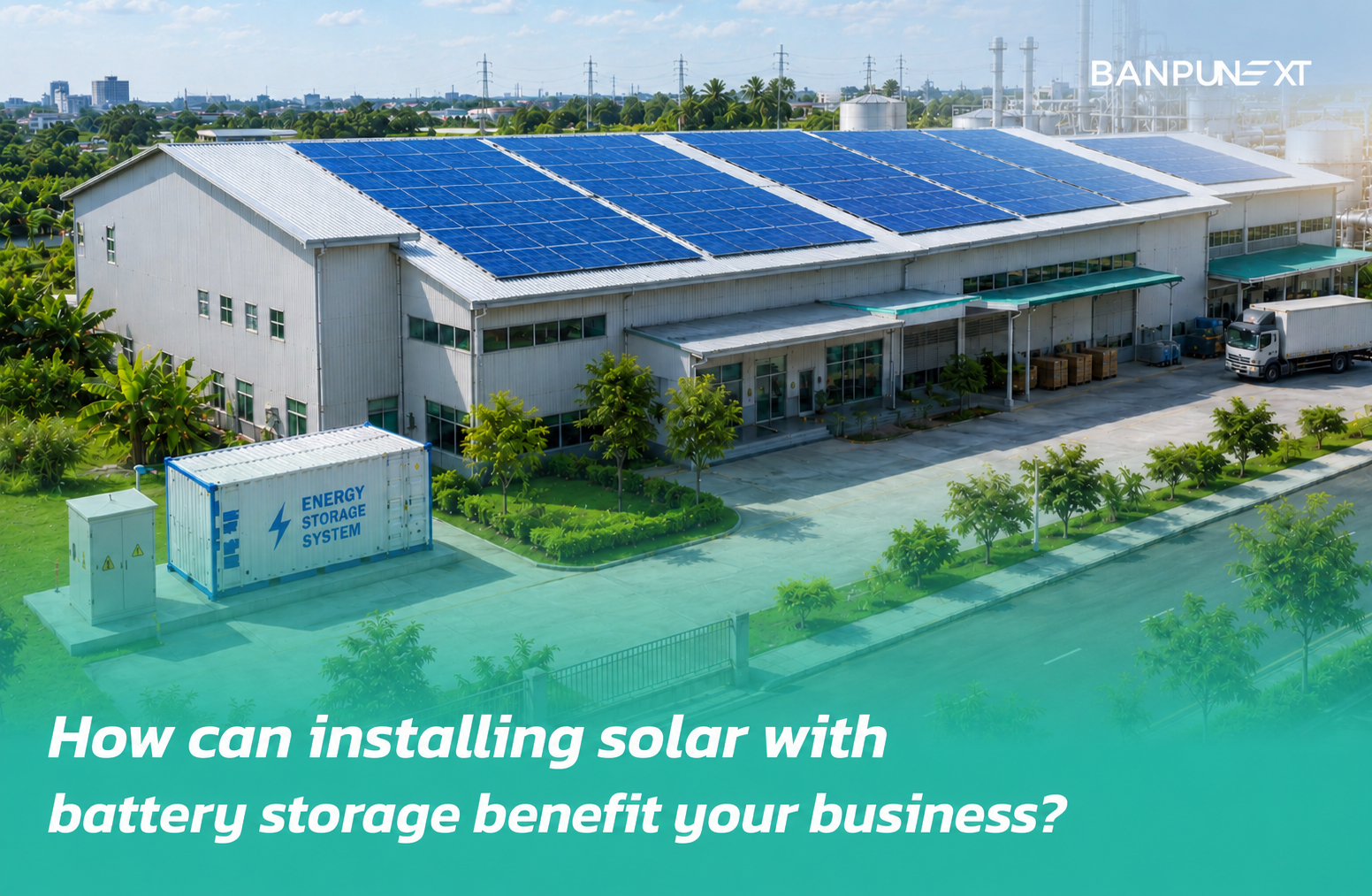
Although solar systems have become a popular solution for reducing electricity costs in the business sector, one key limitation remains: “power can be generated but not stored.” As a result, businesses that operate during nighttime hours or require continuous energy usage throughout the day may not be able to maximize the full value of solar energy. At the same time, power outages or voltage fluctuations can disrupt production processes, critical systems, and overall business continuity.
Today, Peak Demand Charges and Time-of-Use (TOU) electricity pricing are becoming major cost factors that many organizations may overlook, especially factories, large commercial buildings, and businesses with high electricity consumption during peak periods. Installing solar systems alone may therefore not be sufficient for long-term energy cost management.
An Energy Storage System (ESS) is becoming a key solution that elevates energy technology beyond power generation alone toward fully integrated energy storage and management. With battery systems capable of storing energy and supplying electricity at optimal times, organizations can gain greater control over their energy usage, helping optimize electricity costs and improve energy efficiency.
Investing in ESS for businesses is therefore not only about backup power. It is also a strategic approach to enhancing business competitiveness through better energy cost management, improved business continuity, and stronger alignment with ESG goals.
What Is Solar with Battery Storage (ESS) and How Is It Different from Solar Systems Alone?
Simply put, a solar system is an “electricity generation source” that can operate only when sunlight is available, while an ESS (Energy Storage System) is an “energy storage solution” that stores electricity for use when needed.
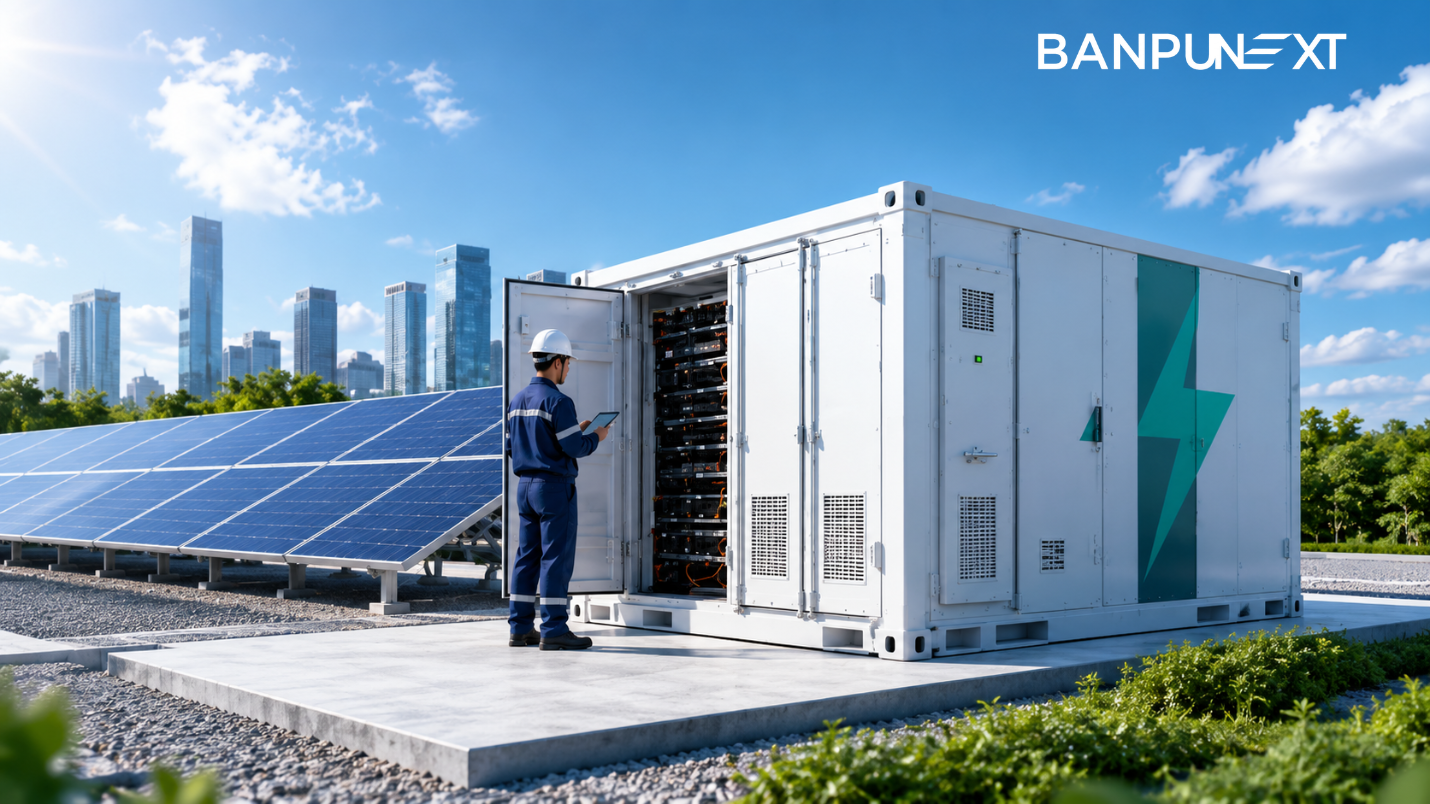
When solar systems are integrated with ESS, excess energy generated during the daytime can be stored in batteries and used later during the evening, nighttime, or periods of high electricity prices. This enables more flexible energy usage, reduces reliance on the main power grid, and improves energy cost management efficiency.
From a system design perspective, solar systems and ESS can operate together with the electricity grid or other power sources in several configurations, including:
- On-grid : Solar systems and ESS are connected to the utility grid, helping manage electricity usage during Peak and Off-peak periods.
- Hybrid : Energy can be supplied from multiple sources, including solar, batteries, utility electricity, or generators. The system automatically selects the most suitable energy source at different times to ensure continuous and stable power supply.
- Off-grid : Electricity is supplied entirely by solar systems and batteries without connection to the utility grid. This setup is suitable for areas without grid access or locations with unstable electricity supply.
Benefits of ESS for Business
Installing solar with battery storage for business is not only about reducing electricity bills. It is about building an energy management foundation that helps control costs, risks, and sustainability in the long term.
- Use energy more efficiently and reduce electricity costs during peak periods For businesses under a Time-of-Use electricity structure, where electricity rates vary by period, peak-hour electricity costs often become a major part of total expenses.
ESS helps manage energy usage by charging electricity during low-cost off-peak periods and discharging it during high-cost peak periods. This can help reduce Peak Demand Charge more effectively.
- Improve Solar Energy Utilization Efficiency
Solar systems may generate more electricity than the amount being used during certain periods of the day, causing some energy to remain unused.
ESS helps store this excess energy for use during more suitable periods, reducing energy waste and enabling businesses to maximize the value of clean energy usage.
- Enhance Power Reliability and Reduce Operational Risks
ESS also serves as a backup power source during power outages or voltage fluctuations, which may affect production processes, machinery, or critical business systems. This helps reduce the risk of operational disruptions (Downtime) and supports greater business continuity.
- Support Corporate ESG and Net Zero Goals
Using ESS together with solar systems helps increase the share of clean energy consumption within organizations while reducing reliance on the electricity grid and generators. This supports carbon emissions reduction in business operations and improves overall energy efficiency. In addition, it can support ESG assessments and sustainability reporting, which are becoming increasingly important factors for investors, business partners, and supply chains.
Which Businesses Benefit Most from ESS?
While Energy Storage Systems (ESS) can help improve energy efficiency and reduce electricity costs across many types of businesses, the value becomes especially significant for organizations with high electricity consumption, 24/7 operations, or critical operations that cannot tolerate even short periods of power disruption, such as:
- Data Center
Data centers rely on uninterrupted power supply at a mission-critical level, as even a brief outage can immediately cause severe operational and data-related impacts. A power interruption lasting only a few seconds may affect large-scale systems and services. At the same time, data centers typically have very high electricity costs. ESS can therefore support both power reliability and energy cost management simultaneously.
- Large Industrial Factories
Factories operating across two or three production shifts often face high Peak Demand charges without realizing it. ESS can help reduce electricity usage during peak periods through peak shaving, significantly lowering demand charges. In addition, it supports ESG goals, which are increasingly becoming business requirements from customers and supply chains.
- Food and Packaging Industries
Food processing plants, cold storage warehouses, and packaging factories typically require continuous electricity usage, especially for cooling systems and production lines, which are among their major operating costs. ESS helps reduce electricity costs during peak periods while improving power reliability and reducing the risk of product damage caused by power disruptions.
- Retail and Healthcare Businesses
Although retail and healthcare may not be the first sectors typically associated with ESS, energy reliability remains highly important for these businesses. Hospitals require highly stable electricity systems to support patient safety, while retail businesses such as shopping malls often experience high electricity consumption during peak hours and usually have large rooftop areas that can be integrated with solar systems and ESS to maximize energy efficiency.
BOI Incentives Businesses Should Know About
Beyond reducing electricity costs, the Thai government also provides investment support for clean energy systems and Energy Storage Systems (ESS) for businesses through incentives from the Thailand Board of Investment (BOI) under the industry upgrading measure (Smart Move). Businesses can apply for corporate income tax exemptions of up to 50% of the investment value for solar systems and ESS projects for a period of up to 3 years. This has become another important factor that helps improve investment value and supports business decisions to invest in clean energy solutions today.
For more information about the application process and related documents, click here.
Why Choose Banpu NEXT for Solar Systems with Battery Storage?
Investing in an Energy Storage System (ESS) integrated with solar systems is a strategic decision that requires a partner with comprehensive capabilities — not only in system installation, but also in energy system design and business-level energy management.
Banpu NEXT provides comprehensive Net Zero Solutions, ranging from consultation, carbon assessment, and greenhouse gas reduction planning to the implementation of suitable energy solutions. By leveraging AI and intelligent technologies for data analysis, these solutions help businesses manage energy usage more efficiently.
With extensive experience in energy systems for commercial and industrial sectors, as well as a strong ecosystem in battery and related technologies, Banpu NEXT delivers tailor-made solutions designed to fit each business’s specific needs. The process begins with electricity usage analysis, followed by system design, installation, and energy management planning aligned with each organization’s energy consumption patterns, together with digital platforms for real-time energy monitoring and analytics covering solar energy generation, battery charging and discharging, electricity usage from the grid, and generator operations. All data can be conveniently accessed anytime, anywhere through an easy-to-use mobile application.
To make clean energy more accessible, Banpu NEXT offers three flexible investment models tailored to different business goals, including Zero Investment, Own Investment, and long-term leasing options.
| Signature Package
0 THB investment cost |
Smart Package
Clean energy adoption with cost-effective investment |
Subscription Package
Better cost management through fixed monthly payments |
|
| Key Benefits
|
• Banpu NEXT fully invests in the system
• Immediate savings through electricity bill discounts from solar energy. • Guaranteed savings throughout the contract period • Free operation and maintenance services throughout the contract period • Customers become system owners at the end of the 10–20-year contract
|
• Solar investment starting from less than THB 25/Watt
• Battery investment starting from THB 10,000/kWh • Customers become full system owners upon installation completion and full payment. • Eligible for maximum BOI tax incentives • Solar panel warranty: 10–12 years / Inverter: 10 years / Battery: 5 years (extendable up to 20 years) • Free operation and maintenance services for the first 5 years |
• Fixed monthly service payments throughout the contract period
• Customers become system owners at the end of the contract • Eligible for maximum BOI tax incentives • Equipment warranty throughout the contract period (5–10 years) • Free operation and maintenance services throughout the contract period (5–10 years)
|
| Suitable For
|
Businesses looking to reduce electricity costs immediately without large upfront investment while maintaining financial liquidity | Businesses seeking maximum long-term value and tax benefits | Businesses looking to manage costs through predictable fixed monthly payments and tax benefits |
Conclusion
Investing in an Energy Storage System (ESS) is not only about installing technology to store backup power for emergencies. It represents an important shift in how businesses manage energy more intelligently, reduce energy costs, especially Peak Demand Charges, and minimize the risk of operational disruptions. More importantly, ESS helps strengthen corporate ESG goals, supporting long-term sustainability and enhancing business competitiveness.
Contact Us – Banpu NEXT
Frequently Asked Questions
Q1: What is an ESS?
- An Energy Storage System (ESS) is a battery energy storage solution that allows businesses to store electricity for use when needed, such as during peak electricity pricing periods or as backup power during outages.
Q2: What is the typical payback period for ESS?
- The payback period depends on the business use case and electricity tariff structure. For example:
- Peak shaving under Time-of-Use (TOU/TOD) electricity pricing typically has a payback period of around 5 years.
- Solar self-consumption cases, saving depend on the proportion of generated electricity that can be self-consumed, as well as each business’s energy usage patterns.
Q3: Do businesses need to fully invest in solar systems with battery storage on their own?
- Not necessarily. Banpu NEXT offers a Zero Investment option (Signature Package), where the system is fully invested by the company.
Q4: What are the differences between On-grid, Hybrid, and Off-grid ESS systems?
- On-grid: Connected to the utility grid to help manage energy costs during Peak and Off-peak periods.
Hybrid: Uses multiple energy sources such as solar, batteries, utility electricity, or generators. The system automatically selects the most suitable energy source at different times to ensure continuous and uninterrupted power supply.
Off-grid: Operates entirely using solar systems and batteries without connection to the utility grid, making it suitable for remote areas or locations with unstable electricity supply.