Amid economic conditions where energy costs have become one of the major expenses for businesses, efficient energy management has become a key factor in strengthening competitiveness and controlling costs sustainably, especially in an era where energy prices are volatile and directly affect business operations.
Energy costs and carbon management are no longer just environmental issues. They have become part of a business strategy that affects cost, credibility, and commercial opportunities. Many organizations are now placing greater importance on clean energy usage and carbon emission management to meet sustainability standards, which are becoming a new expectation across the global business sector.
As businesses begin to collect and analyze energy usage data in greater detail, they will see that installing solar is not only a clean energy option. It is also an important tool for managing costs, reducing risks from energy price volatility, lowering carbon footprint, and enhancing the organization’s competitiveness on an international level.
This article will guide you through everything from preparation before installing solar panels and suitable installation types for businesses to investment models, helping your business choose a solution that is cost-effective and aligned with long-term energy and sustainability goals.
What Should Businesses Prepare Before Installing Solar?
Cost-effective solar installation does not begin only with choosing panels or technology. It starts with planning based on the business’s energy usage patterns, so that the system can generate electricity in line with actual usage, reduce electricity bills effectively, and achieve a faster payback period.
There are 3 key areas businesses should prepare for before installation.
1.Electricity Usage or Load Profile
Businesses should begin by analyzing their electricity usage patterns across different time periods to identify when peak usage occurs. This information helps design the right solar system size for actual usage and investment efficiency. It also helps estimate the payback period more accurately.
2.Installation Area and Structural Readiness
Today, solar technology has become more flexible and can be installed in many formats, including rooftops, parking areas or carports, ground areas, and even large ponds. This allows businesses to make better use of existing space and create additional energy value.
However, before installation, businesses should inspect structural strength, available space, and sunlight direction to ensure the system can generate electricity at maximum efficiency.
Common solar installation types for businesses include:
-
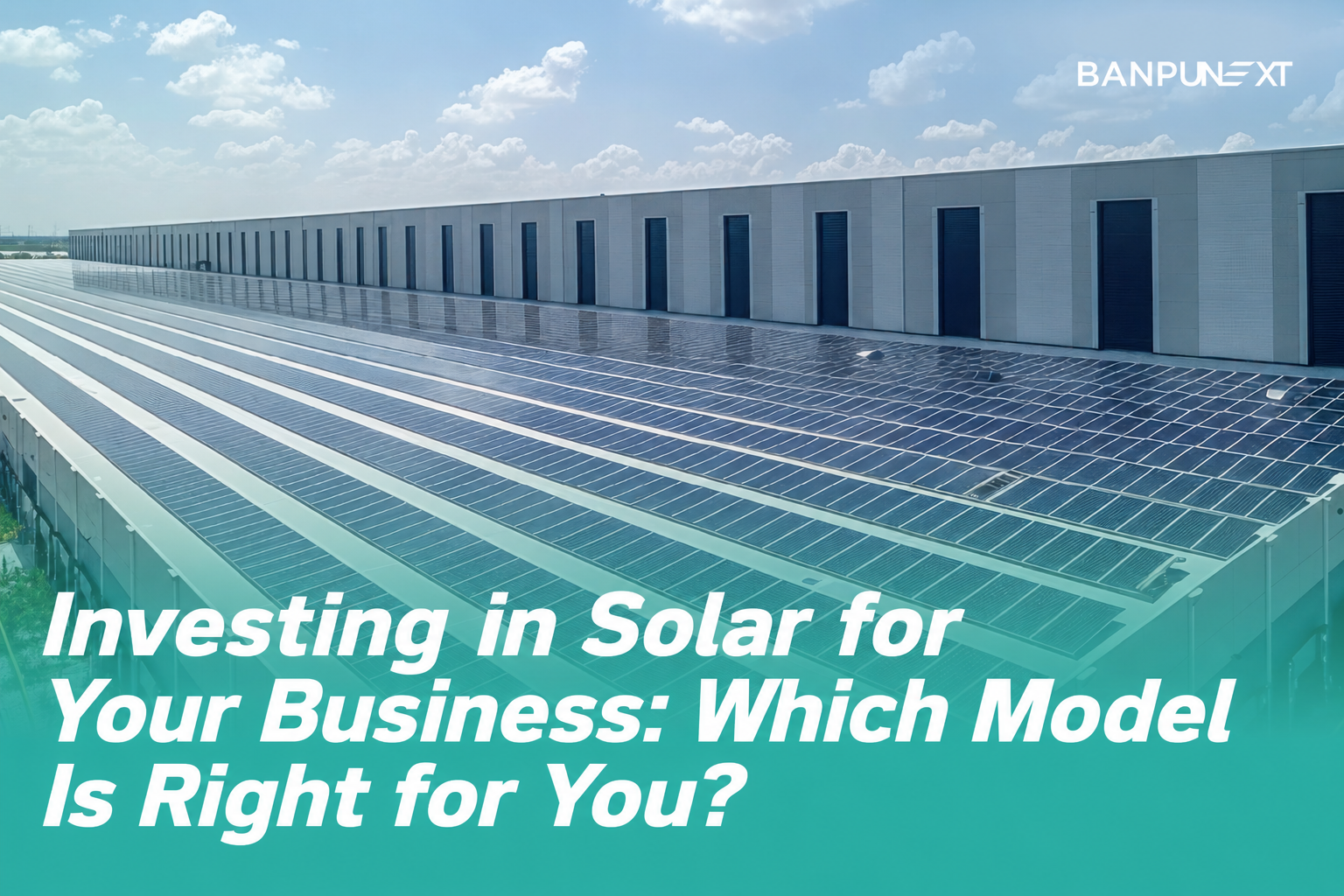
- Solar Rooftop : Installed on factory roofs, buildings, or warehouses. This is suitable for businesses with large roof areas and helps make use of existing space while reducing electricity costs without requiring additional land.
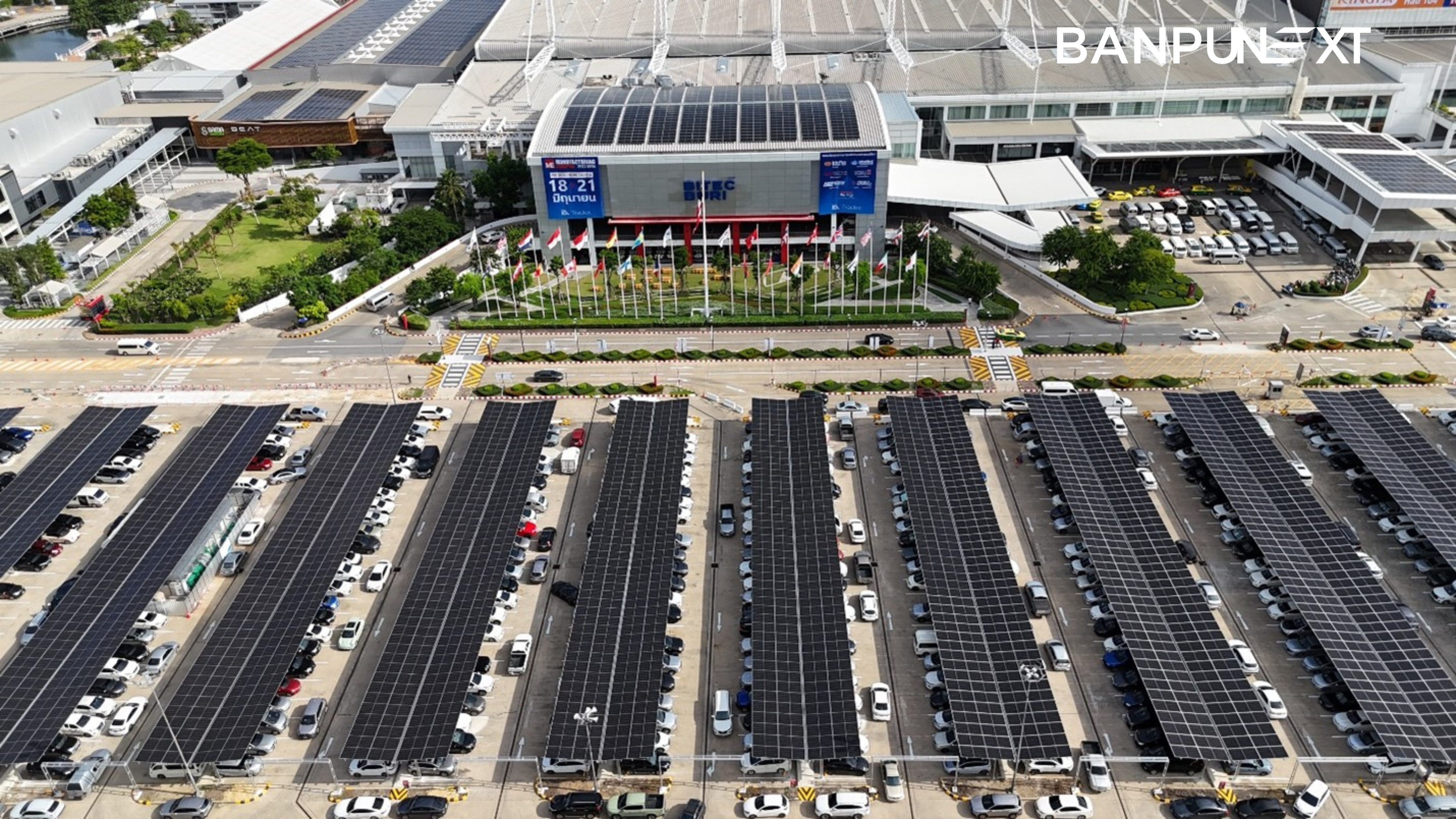
- Solar Carport: Installed over parking areas. This turns parking spaces into energy-generating areas while also adding convenience by providing covered parking.
- Ground Mount Solar: Installed on the ground. This is suitable for businesses with large available land areas. The system can be designed with an optimal sunlight angle, which helps improve electricity generation efficiency and makes maintenance easier.
- Solar Floating: Installed on large ponds. This is suitable for businesses with limited land space, as it provides another installation option without affecting the main usable area. It also helps reduce the temperature around the panels, which can improve electricity generation efficiency.
3.Permits and Grid Connection
Another important step before installing solar panels is checking the readiness of the building and electrical system, as well as applying for grid connection with the electricity authority. This ensures that the system can operate safely and comply with relevant standards.
Having an experienced expert or partner can help manage the process from site survey, system design, and structural inspection to documentation and coordination with relevant authorities. This allows businesses to start using solar energy smoothly, reduces operational complexity, and ensures long-term system efficiency.
Which Investment Model Is Right for Your Business?
Today, solar installation for businesses offers greater investment flexibility to suit each organization’s goals and financial structure.
Whether a business wants to invest directly in long-term returns or reduce electricity costs immediately without upfront capital, there are two main solar investment models for businesses.
| Investment Model | Details | Benefits |
| Own Investment | The business invests 100% in installing the system. | Full ownership of the system and direct electricity cost savings. |
| Zero Investment | The service provider fully invests in the system and charges electricity based on usage | No upfront investment required, helps preserve business cash flow, and ownership follows the terms specified in the contract. |
Which Option Best Fits Your Business?
- Own Investment
Suitable for organizations with available investment budgets that want to own the solar system from day one. This option allows businesses to immediately benefit from electricity cost savings, while providing greater flexibility in system management and long-term energy planning.
- Zero Investment
Suitable for businesses that want to reduce energy costs without affecting their investment budget, or those that do not want to use a large upfront investment at the start.
The service provider handles installation and system maintenance throughout the contract period. The business pays for the solar electricity they use based at an agreed rate, which is often lower than the electricity tariff from the utility provider. This helps businesses access clean energy more easily without taking on the burden of upfront investment.
 Why Choose Banpu NEXT as Your Business Solar Partner?
Solar installation for businesses is more than choosing equipment and an installer. It is about building an energy system that can operate efficiently in the long term, covering energy savings, system stability, and investment value.
Therefore, choosing a partner with experience and expertise in industrial energy is an important factor that helps businesses manage energy costs with confidence and support future sustainability goals.
Banpu NEXT provides comprehensive Net Zero Solutions through end-to-end clean energy solutions, covering energy usage analysis, system design and installation, as well as long-term operation and performance management with 24/7 after-sales service, while integrating AI and digital technologies to enhance energy efficiency, reduce energy costs, and support businesses in transitioning toward sustainable energy usage.
End-to-End Services Integrated with AI and Advanced Technologies.
1.Consultation and Customized System Design
Our expert team analyzes electricity usage patterns (Load Profile), installation conditions, and organizational energy goals to design solar systems tailored to each business’s operational needs.
2.System Installation with Standardized Equipment and Technologies
Utilizing internationally certified equipment and technologies to ensure efficient power generation, system stability, and long-term operational reliability.
3.Real-Time Performance Monitoring
Customers can monitor electricity generation, energy savings, and carbon reduction data in real time through applications and digital platforms, enabling easier, more accurate, and continuous energy management.
4.Continuous Operation and Maintenance (O&M) Services
Dedicated teams provide ongoing system inspection, maintenance, and troubleshooting services to ensure solar power systems operate at optimal performance throughout the contract period.
5.24/7 After-Sales Support
Providing consultation and system support with rapid issue resolution to help minimize downtime risks and support business continuity.
6.Flexible Investment Options
Businesses can choose investment models that align with their goals and financial plans, including Own Investment, Zero Investment, and Leasing options, making clean energy more accessible and financially suitable for different organizations.
7.Scalable to Energy Storage Systems (ESS)
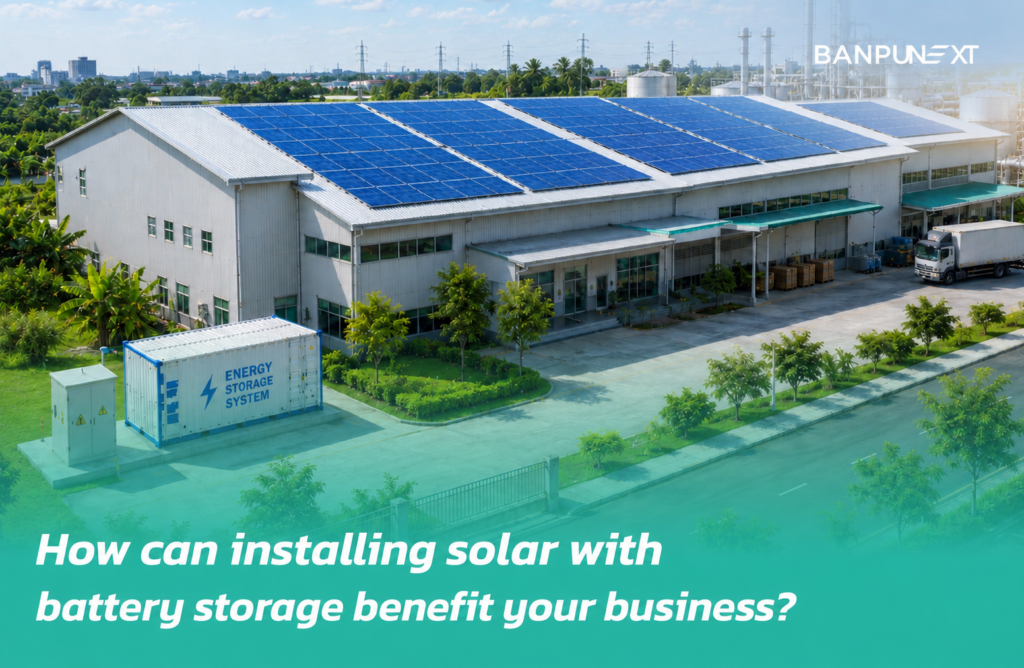
In addition to solar power systems, businesses can expand to Energy Storage Systems (ESS) to enhance power stability, reduce energy fluctuations, and improve overall energy management efficiency, while supporting future development toward fully integrated energy systems.
With comprehensive energy expertise and advanced technological capabilities, Banpu NEXT is more than a solar installation provider; it is a long-term energy partner that helps businesses manage energy costs, improve energy efficiency, and confidently move toward sustainability goals through reliable service standards and continuous support throughout the system lifecycle.
Conclusion
Installing solar systems for businesses is no longer just about reducing electricity costs. It is an investment in energy cost management, energy security, and long-term business competitiveness. Choosing the right installation approach, investment model, and experienced partner can help businesses optimize energy usage, maximize long-term value, and support future sustainability goals.
Contact us – Banpu NEXT
Frequently Asked Questions (FAQ)
Q1: How should businesses start installing solar systems?
- Businesses should begin by analyzing their electricity usage patterns (Load Profile) and assessing site readiness to design a system size that best matches actual operational needs and maximizes cost-effectiveness. Consulting with energy experts such as Banpu NEXT can help businesses plan and design systems tailored to their specific requirements.
Q2: Does installing solar systems require a large upfront investment?
- Businesses do not always need to invest upfront on their own. Today, there are multiple investment options available, including Own Investment, Zero Investment, and Leasing models, allowing businesses to access solar power systems more easily based on their budgets and financial plans.
Q3: Besides reducing electricity costs, how can solar systems benefit businesses?
- In addition to lowering electricity costs, solar systems help reduce the impact of fluctuating electricity prices, improve energy efficiency, and support corporate sustainability goals. They can also enhance brand image and strengthen long-term business credibility.
Q4: Can solar systems still operate during a power outage?
- Conventional solar systems are designed to shut down during power outages for grid safety. However, businesses can install an Energy Storage System (ESS) to provide backup power and support critical operations during emergencies.