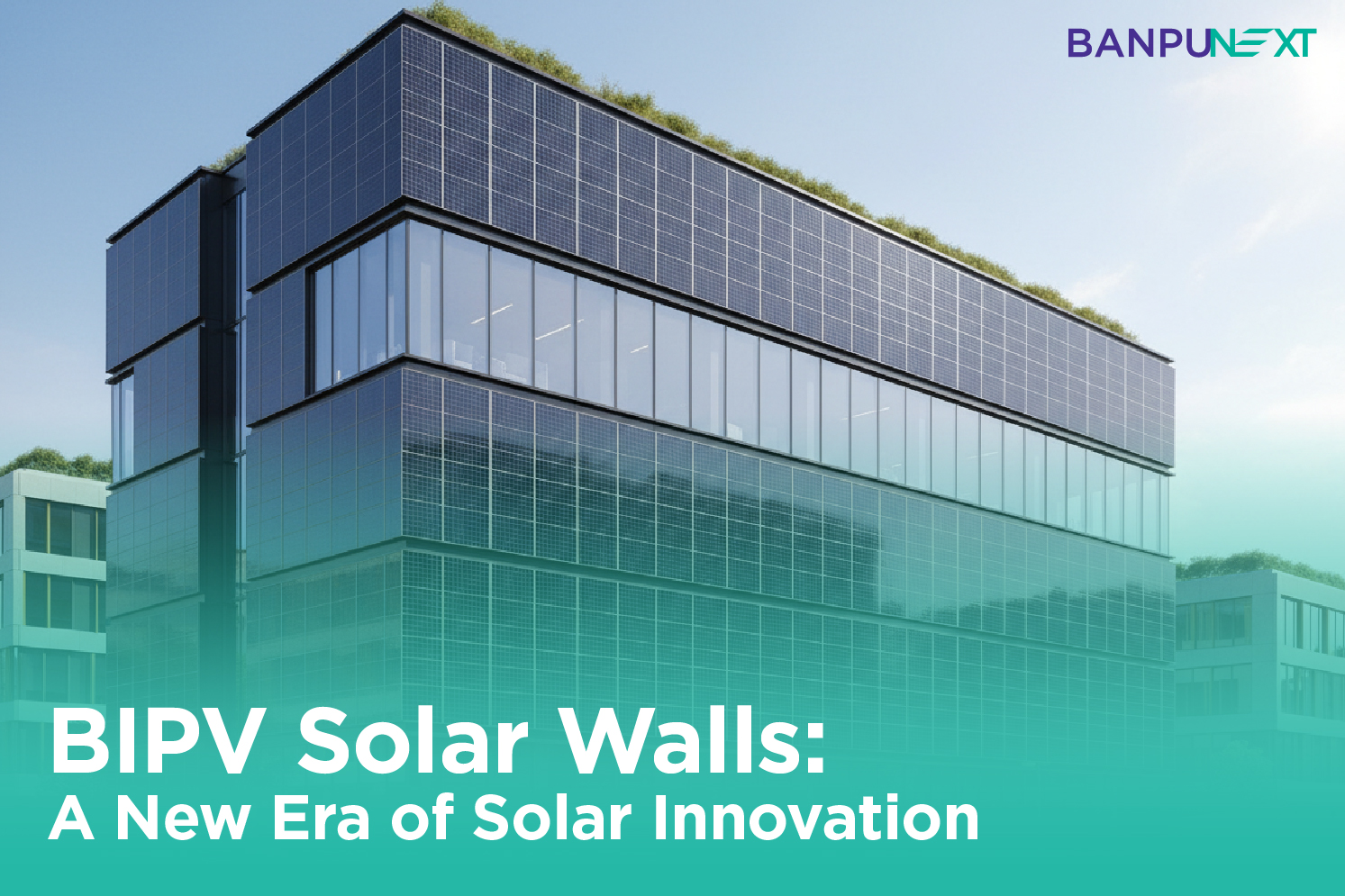
When people talk about solar cells, many tend to think of black or blue solar panels installed on building rooftops. But today, solar technology has advanced far beyond that, with the innovation of BIPV, or Building-Integrated Photovoltaics, which allows small-scale solar cells to truly become an integral “part of the building” itself.
BIPV addresses the needs of urban buildings that require “aesthetics,” “space efficiency,” and “enhanced energy production efficiency” at the same time. Let’s get to know this technology.
What is BIPV?
BIPV stands for Building-Integrated Photovoltaics, or “building-integrated solar system.” It refers to solar panels that are designed to be a “structural component of the building,” rather than systems that are simply installed on rooftops like conventional solar panels.
What makes BIPV unique is that the solar panels function as “construction materials,” such as walls, roofs, or glass, while also serving as a “power generation source” at the same time. This helps reduce construction material costs and increase energy production area simultaneously.
The most common types of BIPV
Solar Wall / Solar Facade: Building walls that generate electricity. This solution is commonly used in high-rise buildings where the wall surface area exceeds the roof space, and can be designed to seamlessly integrate with the building’s architecture.
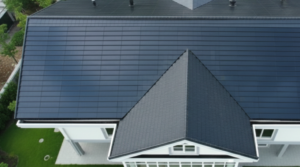
Solar Roof Tile: Roof tiles that generate electricity. They look like regular roof tiles but also have solar cells embedded inside, making them suitable for residential homes or buildings that prioritize aesthetics.
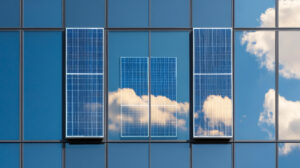
Solar Window / Solar Glass: Semi-transparent glass that can generate electricity while allowing natural light to pass through. This solution is ideal for office buildings that require daylight while generating electricity at the same time.
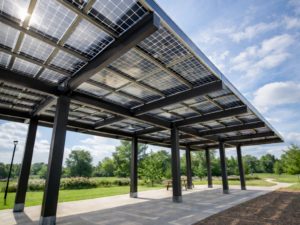
Solar Shading / Canopy: Awnings or facades that function as sunshades, reduce heat entering the building while simultaneously generating electricity.
Why BIPV has become a global trend
- Save space in urban areas (Urban Energy): Buildings in cities often have limited roof space. BIPV enables walls and glass surfaces to be used for energy generation as well, significantly increasing power generation potential.
- Helps regulate building temperature: BIPV acts as an additional layer of thermal insulation, reducing the load on air-conditioning systems and helping to save more on electricity costs.
- More aesthetically pleasing than conventional solar systems: BIPV can be designed to blend seamlessly with a building’s architecture, eliminating the “added on” appearance often associated with traditional solar panels.
- Supports green building standards: BIPV helps buildings more easily achieve LEED, WELL, and Net Zero Building standards, enhancing long-term building value.
Advantages and limitations of BIPV
Advantages of BIPV
- Can be used as walls, roofs, or glass, helping reduce some construction material costs.
- Offers aesthetic flexibility in design and can serve as an “architectural element” of the building.
- Helps reduce heat entering the building, allowing air-conditioning systems to consume less electricity.
- Enhances power generation potential in high-rise buildings with limited roof space.
Limitations of BIPV
- Higher cost than conventional solar systems: Specialized design and manufacturing result in a higher cost per watt compared to standard solar panels.
-
- Complex installation: Requires early-stagePlanning must be done collaboration between architects and engineers from the building design stage, and it is not as easy to add later compared to conventional solar systems.
- Requires specialized materials: Standard solar panels cannot be used; only materials and brands specifically designed for BIPV must be selected.
- May not be cost-effective for all building types: For factories or industrial buildings with large roof areas, conventional solar rooftop systems may offer better returns due to lower costs and easier installation.
- Not yet widespread in Thailand: A lack of experienced specialists, limited suppliers, higher costs, and few local case studies, making many building owners hesitant to invest.
Comprehensive solar energy solutions from Banpu NEXT, designed for Thai Businesses.
While BIPV technology is a trend worth watching, Banpu NEXT understands that every business has unique requirements. That is why we focus on Tailored Solar Solutions—carefully designed to match your operational context and investment goals.
- Solar Rooftop: Suitable for factories, warehouses, and office buildings with sufficient roof space. This remains the most cost-effective solution for most businesses.
- Solar Carport: Utilizes parking areas to generate energy. Suitable for buildings with limited roof capacity or those seeking additional generation capacity.
- Solar Floating: A solution for limited spaces, installed on the water surface of ponds or reservoirs, which also helps reduce water evaporation.
- Digital platform: Enables real-time monitoring of energy production 24/7, with automated alerting for system abnormalities.
- After-sales service: A dedicated support team available 24 hours a day, equipped with Drone Thermal technology for accurate heat inspection of panels, and solar panel cleaning services twice a year to help ensure continuous and optimal performance of the solar system.
Ready to upgrade your building to generate more energy?
No matter which type of solar system you are interested in, Banpu NEXT is ready to provide expert consultation and design solutions tailored to your business, helping your business confidently move toward the Net Zero goal.
Calculate solar installation – Banpu NEXT