Many businesses that have already installed solar panels may find that while solar helps reduce electricity bills during the daytime, electricity generation decreases at night or when sunlight is insufficient. During these periods, businesses are forced to rely on power from the Grid or the utility’s electrical network as usual. As a result, energy cost control cannot reach its full potential.
This is why modern businesses are beginning to seek more comprehensive solutions—not only generating electricity, but also being able to “store electricity” and “intelligently control electricity usage.” All of this is the core of the Smart Grid concept, which is transforming power systems worldwide.
What Does a Smart Grid Consist Of? Get to Know the 3 Key Components
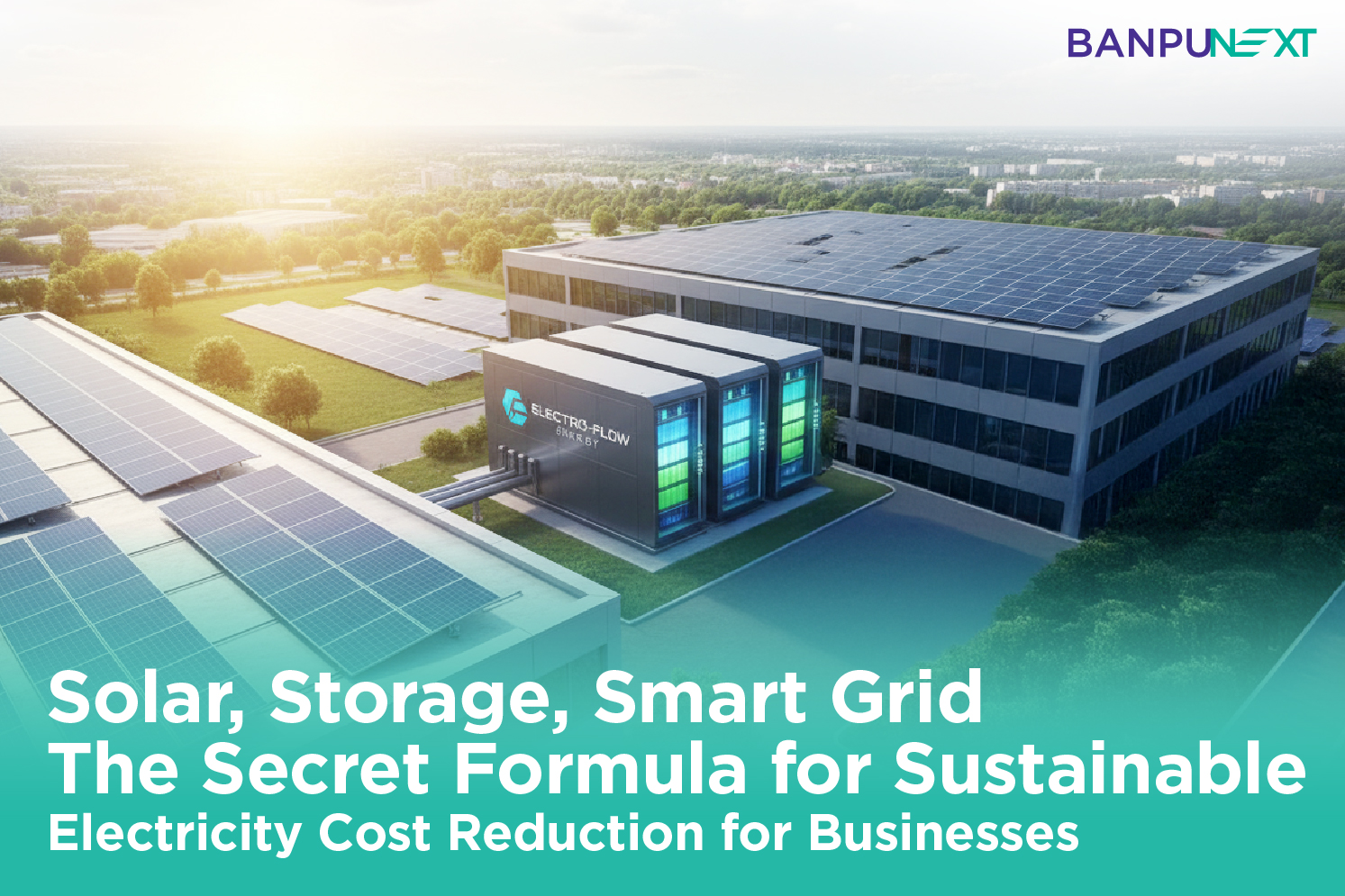
A Smart Grid is an intelligent power grid system that uses digital technology to manage electricity efficiently by seamlessly connecting power generation sources, storage systems, and electricity users. A Smart Grid system is built on three fundamental components.
1. Solar System: Clean Electricity Generation from Sunlight or Solar Panels (H3)
Solar panels are the starting point that many businesses are familiar with. The principle is to convert solar energy into electrical energy for use in buildings or factories. The key advantage are zero fuel cost, as sunlight is freely available every day, and reducing carbon emissions.
However, solar panels also have limitations: they can generate electricity only when sunlight is available. On cloudy days, power generation decreases, and at night, electricity cannot be produced at all. As a result, businesses still need to rely on grid electricity during these periods.
2. Energy Storage System: Store Electricity for Use When Needed
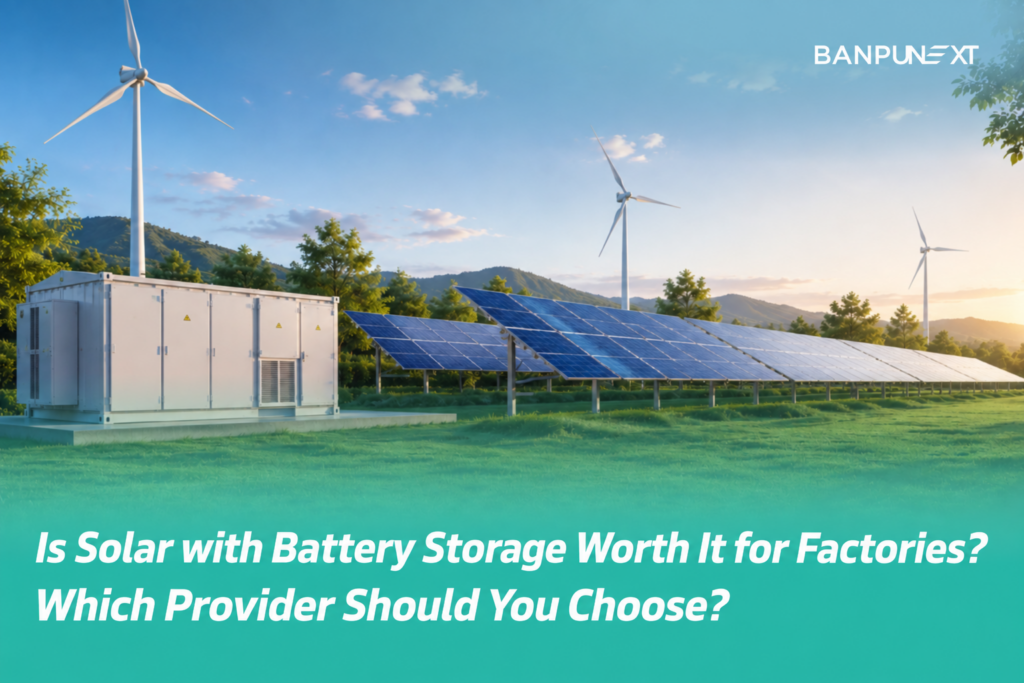
Energy Storage Systems (ESS) are key components that store excess energy from solar systems, providing reserve power for use throughout the day. The principle is to store surplus electricity generated during the daytime in batteries and use it during periods when solar cannot generate electricity, such as at night or during emergencies.
In addition, energy storage allows businesses to avoid consuming electricity during Peak periods when tariffs are high. By charging batteries during Off-peak periods and using the stored energy during Peak hours, businesses can achieve significant electricity cost savings.
3. Smart Grid: The Brain That Makes Everything to Work Together
The Smart Grid acts as the “brain” that connects and coordinates all components of the power system to work together intelligently. The system analyzes real-time data on solar power generation, battery storage levels, and building electricity demand, then determines the optimal power source to use at any given time to maximize cost efficiency.
For example, in the afternoon when solar generation exceeds demand, the system will store excess electricity in the batteries. In the evening, when solar cannot generate electricity and electricity prices are high, the system automatically supplies power from the batteries instead of relying on electricity from the Grid.
When All Components Work Together, What Do Businesses Gain?
When Solar, Storage, and Smart Grid operate together as a single system, businesses gain several clear benefits.
- Generate their own electricity: Solar panels produce clean electricity throughout the daytime, reducing reliance on utility electricity and lowering electricity costs from the very first month of installation.
- Store electricity for when it is needed: Excess electricity from daytime production is stored in batteries and ready for use in the evening, at night, or during periods of low solar generation, eliminating the need to buy expensive electricity during Peak periods.
- Intelligent load control: The Smart Grid system automatically analyzes and manages electricity usage, such as reducing non-essential equipment loads during high-tariff periods or shifting battery charging to times when electricity prices are lower.
- Continuous electricity savings: Unlike standalone solar installations alone, which only save electricity during the daytime, a comprehensive system delivers savings 24 hours a day, whether on sunny or rainy days.
Banpu NEXT Is Ready to Lead Businesses into the Smart Grid Era
Although Thailand is still in the early stages of fully developing Smart Grid systems, businesses can “prepare” starting today by preparing energy infrastructure and systems that are ready for the future.
Banpu NEXT is a Net Zero Solutions provider in the Asia-Pacific, offering comprehensive solutions that help businesses confidently step into the Smart Grid era.
- Net Zero consulting services: Our team of experts analyzes organizational energy usage, develops strategies to reduce electricity costs and carbon emissions, and designs systems tailored to your business needs.
- Solar Solutions: End-to-end solar installation services, from site surveys, system design, installation, and 24-hour after-sales service, with real-time power generation monitoring applications.
- Battery Energy Storage Systems (ESS): Store surplus solar energy for use when needed, enabling businesses to access clean energy 24 hours a day and effectively reduce electricity costs during Peak periods.
Prepare for the Future of Smart Grid Today!
Ready to move toward an intelligent energy system that continuously saves electricity? Contact our expert team today or calculate solar installation for your business now.
or