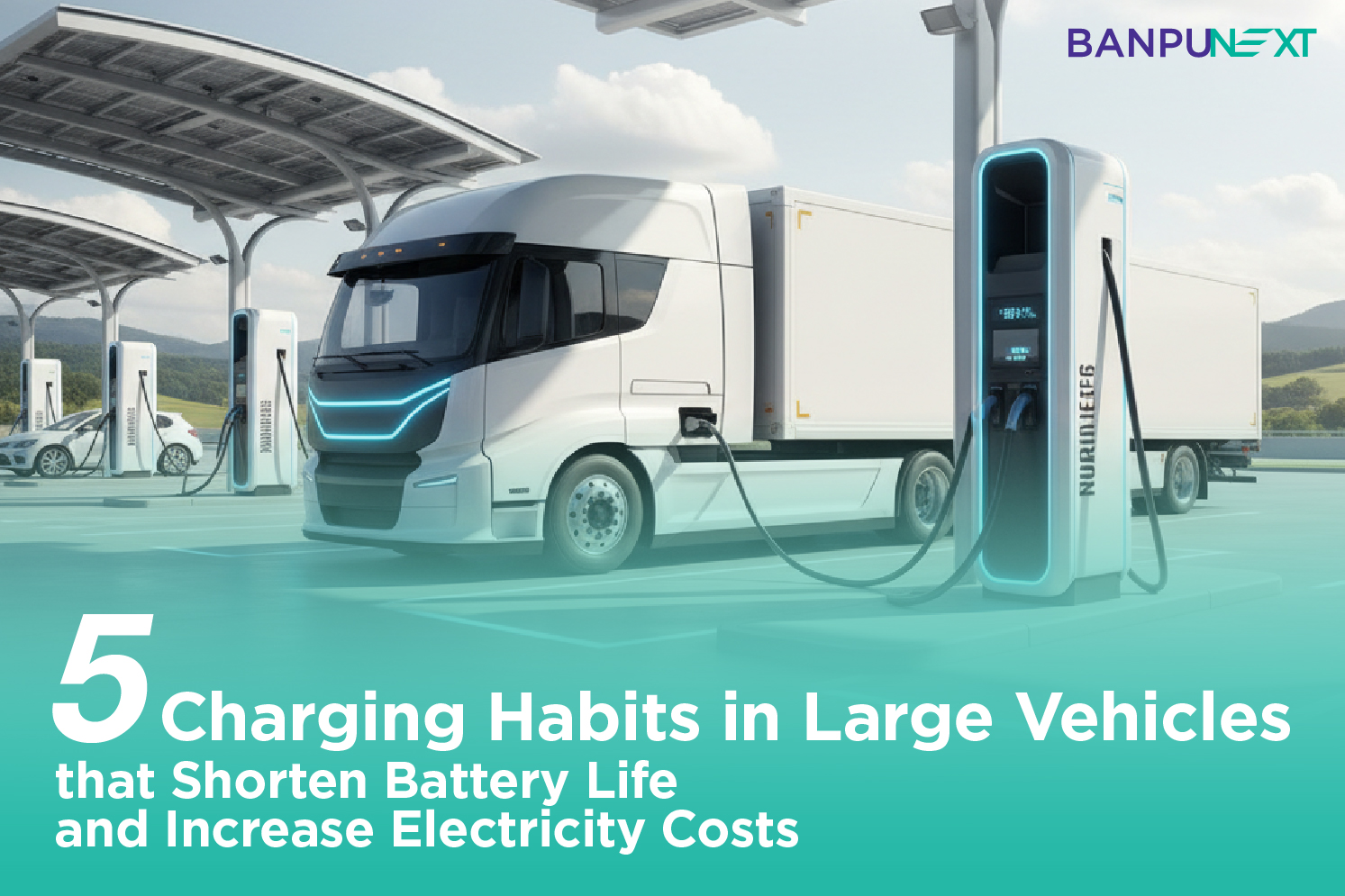
Electric trucks and electric vans require several times more energy than regular electric passenger cars because they carry heavy cargo and travel long distances every day. Charging EVs incorrectly can cause EV batteries to deteriorate faster than they should and increase energy costs without realizing it. Therefore, adjusting behavior and learning proper charging methods is essential to extend battery lifespan and maximize cost-effectiveness for corporate EV fleets.
5 Prohibited Charging Behaviors That Large Vehicle Drivers Should Avoid
1. Frequently Letting the Battery Drop to 0%
Driving until the battery is completely depleted on a regular basis not only causes the vehicle to stop in the middle of the road, but also causes battery cells to operate in the most high-risk range for permanent degradation. This is because battery voltage becomes abnormally low and also increases the likelihood of Lithium Plating, a phenomenon where lithium deposits coat the battery electrodes, causing the battery’s energy storage capacity to decrease gradually.
Recommendation: Try not to let the EV battery drop below 20% before charging, in order to maintain stable voltage and help extend battery life in the long term.
2. Charging When the Battery Is Hot or in Extremely Hot Weather
In Thailand’s hot climate, high temperatures are a major enemy of EV batteries, especially for electric trucks that consume more power than usual. Charging while the battery is hot after long-distance driving or charging outdoors under strong sunlight increases the risk of overheating, accelerates degradation, and may trigger automatic safety shutdowns. Recommendation: After long-distance driving, allow the battery to cool down before charging, and choose to charge in the early morning or overnight (Overnight Charging) when temperatures are lower, which helps extend battery lifespan more effectively.
3. Using Low-Quality or Damaged Charging Cables
For electric trucks and electric vans that require significantly higher charging currents than standard vehicles, the “charging cable” is a critical risk point. Substandard or cracked cables can easily cause heat accumulation, short circuits, and fires, especially with the high electrical loads required for large vehicle charging.
Recommendation: Use only internationally certified charging cables, inspect cable conditions before every use, notify station staff immediately if any issues are found, and avoid charging if burn marks, cracks, or other damage are visible.
4. Charging Too Frequently or Charging to 100% Every Time
Charging the battery to 100% every time may seem beneficial, but in reality, it increases stress on battery cells. Keeping the battery at a very high state of charge for extended periods causes gradual degradation. Similarly, charging too frequently —such as topping up after only minimal usage —increases the number of charge cycles, which negatively affects overall battery lifespan.
Recommendation: Maintain the battery level within the 20–80% range for daily use, and charge to 100% only when long-distance travel is truly required.
5. Self-Charging at the Factory with a Non-Standard Electrical System
Charging electric trucks using self-installed chargers at factories is the most dangerous behavior. Electric trucks’ chargers require much higher electrical loads than standard vehicles. Non-standard electrical systems often have issues such as undersized fuses or circuit breakers, leading to heat accumulation and electrical cabinet damage, a lack of residual current devices (RCD/RCCB), which increases the risk of electric shock and fire, and improper installation locations that raise the likelihood of short circuits. This impacts both user safety and the overall cost of repairing the factory’s electrical system.
Recommendation: Choose charging stations specifically designed for large electric trucks that meet standards and support high electrical loads. If installing charger stations at the factory, select service providers with expertise in EV charger installation according to industry standards, especially for fleets that need to charge multiple vehicles simultaneously.
To ensure that business EV fleets operate cost-effectively and sustainably, proper charging alone may not be sufficient. There must also be a support system designed specifically for large vehicles, including power capacity, safety, station readiness, and energy management systems that help prevent premature battery degradation.
EV Charging Stations from Banpu NEXT Help Business EV Fleets Stay “Always Ready”
Banpu NEXT is a leading Net Zero Solutions provider in the Asia-Pacific region, supporting businesses in transitioning to sustainable transportation. With a charging station network designed specifically to support large electric trucks, electric buses, electric motorcycles, and other commercial vehicles, it helps prevent rapid battery degradation and truly reduces energy costs with measurable results. Currently, services are available at 9 stations nationwide, covering key transport routes including Samut Prakan, Samut Sakhon, Pathum Thani, Saraburi, Nakhon Ratchasima, Khon Kaen, Udon Thani, Nakhon Sawan, and Chonburi.
Key Features of Banpu NEXT EV Charging Stations
- Spacious charging stations: Designed to conveniently accommodate large trucks without concerns about parking space or turning radius
- High-power fast charging: Power capacity of 150–240 kW reduces downtime and increases transport efficiency
- Advance booking available: Pre-booking system enables accurate route and charging schedule planning without waiting in line
- Coverage on major routes: Located along key national transport routes, supporting seamless interprovincial travel
- Digital platform: Intelligent fleet management system powered by AI, supporting routing optimization to reduce time and costs and enhance business value
Transition to a Sustainable EV Fleet with Banpu NEXT